 listicle
5 Best Creatine Supplements for Muscle Growth
Table of Contents
- What Is Creatine and How Does It Support Muscle Growth
- Quick Comparison: Top Creatine Supplements
- 1. Transparent Labs Creatine HMB: Best for Comprehensive Muscle Support
- 2. Nutricost Micronized Creatine Monohydrate: Best Value Option
- 3. Thorne Creatine: Best for Third-Party Testing and Safety Verification
- 4. 1st Phorm Micronized Creatine Monohydrate: Best for Mixability and Power Output
- 5. Swolverine Creatine Monohydrate: Best for Clean, Simple Formulation
- How to Take Creatine for Muscle Growth: Dosage and Timing
- Choosing the Right Creatine Supplement for Your Goals
- Frequently Asked Questions
Last Updated: October 4, 2026

What Is Creatine and How Does It Support Muscle Growth
Creatine is a naturally occurring compound found in muscle cells that plays a critical role in producing energy during high-intensity exercise. When you're lifting weights or performing explosive movements, your muscles rely on adenosine triphosphate (ATP) for fuel.
The connection between creatine and muscle growth is straightforward: more available energy means you can perform more reps, lift heavier weights, or maintain intensity longer. That's why creatine supplementation has become one of the most researched and proven ergogenic aids in sports nutrition.
At Body Fuel Fury, we help fitness enthusiasts understand that the best creatine supplements don't need to be complicated.
Creatine monohydrate remains the gold standard because decades of clinical research support its safety and efficacy. But the supplement market now offers variations like micronized versions for better solubility, and formulas combined with complementary ingredients.
Quick Comparison: Top Creatine Supplements
| Product | Best For | Key Feature | Starting Price |
|---|---|---|---|
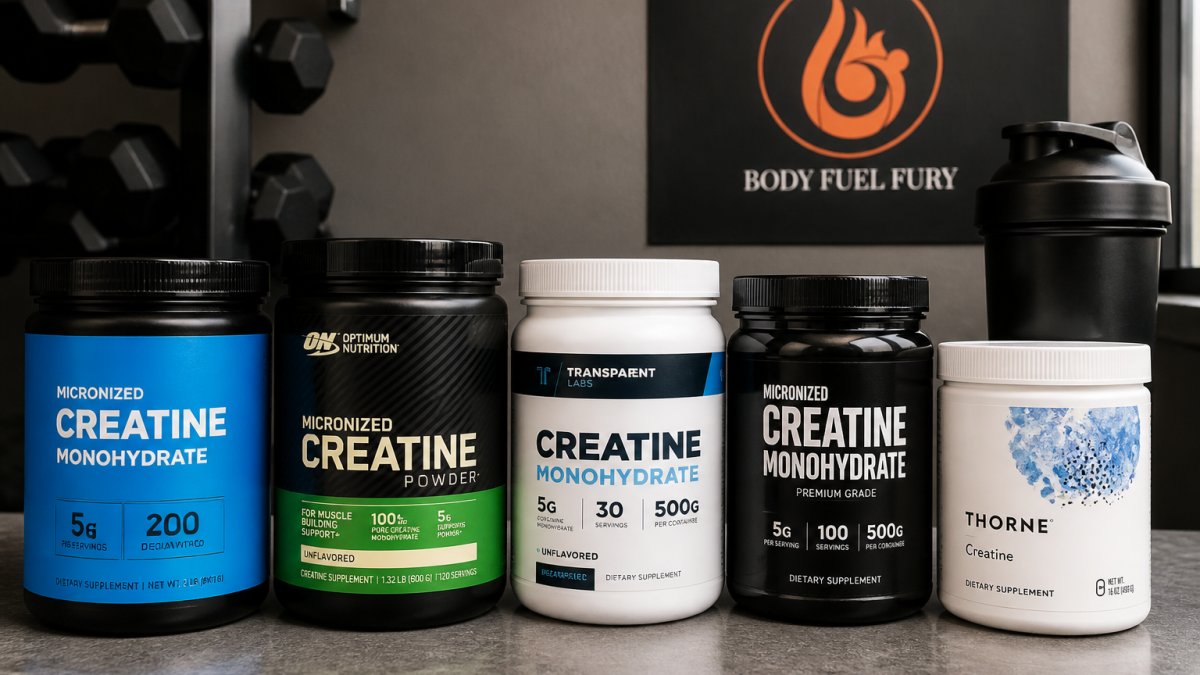
| Transparent Labs Creatine HMB | Comprehensive muscle support | Includes HMB + Vitamin D3 | $49.99 |
| Nutricost Micronized Creatine Monohydrate | Budget-conscious users | Pure, highly soluble | $24.95 |
| Thorne Creatine | Third-party testing priority | NSF Certified for Sport | $32.00 |
| 1st Phorm Micronized Creatine Monohydrate | Power output focus | Excellent mixability | $29.99 |
| Swolverine Creatine Monohydrate | Clean, simple formula | Vegan-friendly, no additives | $34.99 |
1. Transparent Labs Creatine HMB: Best for Comprehensive Muscle Support
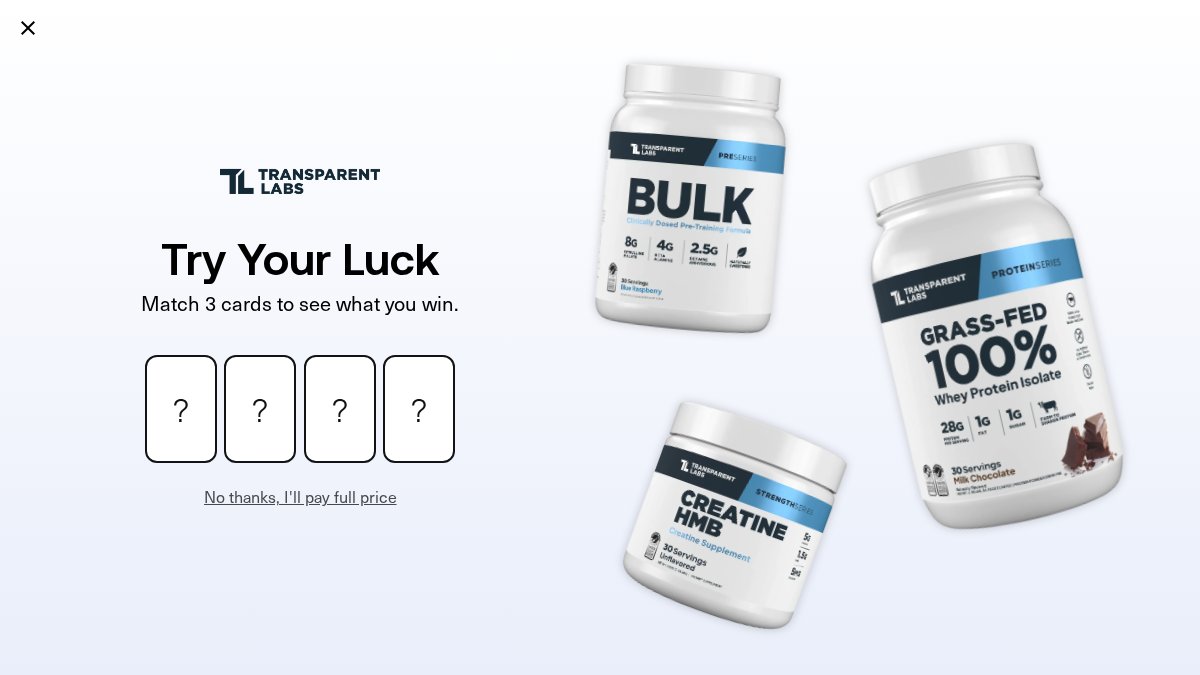
This formula goes beyond basic creatine monohydrate by combining 5g of creatine with 1.5g of HMB (beta-hydroxy beta-methylbutyrate) and Vitamin D3. HMB is an amino acid metabolite that helps prevent muscle breakdown during intense training, making this a more complete muscle-building stack than standalone creatine.
The addition of Vitamin D3 addresses a gap many lifters overlook: vitamin D supports bone health, testosterone production, and immune function, all important when you're training hard. Third-party testing verifies label accuracy and purity, so you know exactly what you're getting.
This product works best if you're serious about maximizing muscle hypertrophy and want ingredients that work synergistically. The trade-off is cost, it's the highest-priced option on this list. For beginners or budget-conscious lifters, this may feel like overkill.
2. Nutricost Micronized Creatine Monohydrate: Best Value Option
If you want pure creatine monohydrate without paying premium prices, Nutricost delivers exactly that. The micronization process breaks down creatine particles into smaller sizes, improving solubility and absorption compared to standard powder. Each serving provides 5g of creatine in a formula with zero fillers or artificial ingredients.
This is manufactured in a GMP-compliant facility and verified as non-GMO and gluten-free. For the price point, you're getting legitimate quality. The unflavored powder mixes into water, protein shakes, or juice without affecting taste.
What you don't get: additional performance ingredients, fancy packaging, or brand prestige. But if your goal is straightforward muscle growth through effective supplementation without spending extra on bells and whistles, this is the smart choice.
3. Thorne Creatine: Best for Third-Party Testing and Safety Verification
Safety-conscious athletes often ask about banned substances and contamination. Thorne addresses this concern directly with NSF Certified for Sport status, meaning independent testing confirms the product contains exactly what the label says and nothing prohibited by major sports organizations.
But understanding third-party testing goes deeper than recognizing a logo. When evaluating any creatine supplement, you can request or access the Certificate of Analysis (COA) from the manufacturer. A COA is a detailed lab report that verifies:
- Creatine purity and concentration, confirms the product contains the stated amount of creatine monohydrate (typically 99%+ purity is standard)
- Heavy metal screening, tests for lead, cadmium, arsenic, and mercury, which can accumulate in low-quality supplements
- Microbial testing, checks for bacteria, mold, and other pathogens that indicate poor manufacturing conditions
- Banned substance screening, verifies the product contains no prohibited compounds (relevant for competitive athletes)
Most reputable manufacturers publish COAs on their websites or provide them upon request. If a brand refuses to share testing data, that's a red flag.
Thorne's creatine monohydrate itself is clean, no additives, no fillers, just the ingredient you're paying for. The powder dissolves well in water and tastes neutral.
For lifters returning to fitness or those new to supplementation, learning to read and request COAs builds confidence in any product you choose long-term. It's a skill that applies across all supplements, not just creatine.
4. 1st Phorm Micronized Creatine Monohydrate: Best for Mixability and Power Output
1st Phorm's micronized formula is engineered for superior mixability, which matters more than it sounds. Poor mixability means clumpy drinks and inconsistent dosing. This product dissolves completely in water or protein shakes, making it genuinely easy to use every day.
The unflavored design lets you stack it with any protein powder or pre-workout without flavor conflicts. Each serving delivers 5g of creatine monohydrate to support ATP regeneration during high-intensity exercise, directly improving power output and strength.
1st Phorm has built a solid reputation in the fitness community for product quality and customer service. The main limitation is distribution, you'll primarily find this through their direct-to-consumer website rather than mainstream retailers. If you value convenience and don't mind ordering direct, this is a reliable choice.
5. Swolverine Creatine Monohydrate: Best for Clean, Simple Formulation
Sometimes the best approach is the simplest. Swolverine delivers exactly 5g of pure creatine monohydrate per serving with zero fillers, additives, or artificial flavors. The formula is vegan-friendly and gluten-free, making it accessible to lifters with dietary restrictions.
This product emphasizes transparency and purity. You get what you pay for, effective creatine supplementation without unnecessary extras. The unflavored powder mixes into any beverage, giving you complete flexibility in how you consume it.
The limitation is straightforward: no synergistic ingredients like HMB, no third-party testing certification, no premium positioning. But if you want a legitimate, clean creatine source at a reasonable price, Swolverine delivers. This appeals to lifters who prefer simplicity and understand that creatine monohydrate itself is the proven active ingredient.
How to Take Creatine for Muscle Growth: Dosage and Timing
The standard approach to creatine supplementation involves a loading phase followed by maintenance dosing.
Loading Phase: Consume 20 grams daily split into 4 doses of 5 grams each for 5-7 days. This rapidly increases intracellular creatine concentration. Many lifters report noticeable improvements in training capacity within this period.
Maintenance Phase: After loading, take 3-5 grams daily in a single dose. This keeps muscle creatine levels elevated without the need for continued high-volume dosing.
Timing Considerations: Post-workout is ideal because your muscles are primed to absorb nutrients. Pair your creatine dose with carbohydrates and protein to enhance uptake.
Hydration: Creatine pulls water into muscle cells, which is beneficial for training but requires you to drink more water than usual.
Beyond Muscle: Creatine and Cognitive Function
While most creatine discussions focus on strength and hypertrophy, emerging research suggests benefits extend to brain health, a dimension many lifters overlook. Your brain, like your muscles, relies on ATP for energy.
Studies suggest creatine may support:
- Memory and learning, particularly verbal and working memory, useful if you're balancing training with work or study
- Mental fatigue resistance, helps maintain focus during long training sessions or high-stress periods
- Neuroprotection, preliminary evidence indicates potential benefits for brain health and age-related cognitive decline
- Mood regulation, some research links creatine to improved mood markers, relevant for lifters managing training stress
This is especially relevant if you're returning to fitness after time away and juggling multiple demands, work, family, training. The cognitive edge from creatine can support consistency and decision-making around your fitness routine.
These benefits are modest compared to the muscle-building effects, but they're real and often surprising to lifters who think of creatine as purely a strength tool. If you're looking for a supplement that supports both physical and mental performance, creatine delivers on both fronts.
Creatine Loading Phase vs Maintenance
The loading phase isn't mandatory, you'll see the same results without it, just over a longer timeframe (typically 3-4 weeks instead of 5-7 days). The choice depends on your timeline and preference.
Loading Phase Advantages:
- Faster saturation of muscle creatine stores
- Noticeable strength and performance improvements within days
- Useful if you're starting a new training program and want immediate capacity gains
Loading Phase Disadvantages:
- Requires strict adherence to 20g daily dosing
- Greater water retention and temporary weight gain
- More expensive in the short term
Maintenance-Only Approach Advantages:
- Simpler dosing (just 3-5g daily)
- Gradual, steady improvement in strength
- Lower cost and less water retention initially
Maintenance-Only Disadvantages:
- Takes 3-4 weeks to see full benefits
- Requires patience if you're eager for results
Most lifters benefit from the loading phase because the psychological boost of rapid strength gains keeps them consistent. But if you prefer simplicity or are sensitive to water retention, skipping loading and going straight to 5g daily works equally well long-term.
Choosing the Right Creatine Supplement for Your Goals
The best creatine supplement matches your priorities: budget, ingredient preferences, and testing standards.
Body Fuel Fury makes it easy to find the right supplement for your situation. Our customer-service-oriented team can help you understand which option aligns with your training goals and budget. We stock products that meet rigorous quality standards because we know that consistency in supplementation matters as much as consistency in the gym.
Start with the loading phase if you want to feel results immediately, then commit to daily maintenance dosing. Pair creatine with resistance training at least 3-4 times weekly and adequate protein intake, that's when supplementation truly shines. Progress over perfection is the approach that works, whether you're returning to fitness after time away or pushing toward your next strength milestone.
Frequently Asked Questions
Which creatine is best for muscle growth?
Creatine monohydrate remains the most researched and effective form for muscle hypertrophy. Micronized versions offer better solubility, while formulas with added ingredients like HMB provide synergistic benefits for protein synthesis and recovery. The best choice depends on your budget and whether you want a standalone supplement or one with complementary compounds. Third-party testing ensures purity and eliminates contamination risk.
How much creatine should I take daily for muscle growth?
Standard dosing is 5g per day during maintenance. Some athletes use a loading phase of 20g daily (split into 4 doses) for 5-7 days to saturate muscles faster, followed by 5g maintenance. Loading accelerates results by 1-2 weeks but is optional. Consistent daily intake matters more than loading. Spread doses throughout the day with carbs and protein for optimal intracellular hydration and ATP production.
What should I look for when buying a creatine supplement?
Prioritize third-party lab testing to verify purity and rule out banned substances or contaminants. Check for micronization (improves solubility), 5g creatine monohydrate per serving, and GMP-certified manufacturing. Avoid unnecessary fillers or artificial additives. Unflavored options stack easily with protein shakes. For athletes requiring competition compliance, look for products with rigorous third-party certifications that provide the highest assurance of safety and label accuracy.
Are there any FDA regulations regarding creatine supplement purity?
Creatine is classified as a dietary supplement, so the FDA does not pre-approve it like medications. However, manufacturers must follow Current Good Manufacturing Practice (CGMP) standards for facility safety and labeling accuracy. Third-party testing by organizations like NSF and Informed Choice provides independent verification that supplements contain what the label claims and no banned substances. This testing is voluntary but highly recommended for quality assurance.
What are the common side effects of creatine, and is it safe?
Creatine is generally safe for healthy individuals. Common side effects are mild: water retention (intracellular, not bloating), slight weight gain, and rare digestive upset. Ensure adequate hydration to support increased intracellular water. Avoid creatine if you have kidney disease or take medications affecting renal function; consult your doctor first. Long-term use is safe for athletes; cycling is unnecessary. Creatine does not cause liver damage, hair loss, or hormonal disruption in clinical research.
Finding the right creatine supplement removes one barrier to consistent training and muscle growth. Body Fuel Fury offers fast online shopping, a user-friendly interface, and customer service designed to answer your questions about supplementation and fitness gear. Shop now and get started with the creatine formula that fits your goals and budget.