 comparison
Is Whey Protein Worth It for Weight Loss?
Table of Contents
- Does Protein Help You Lose Weight
- How Whey Protein Supports Fat Loss and Muscle Preservation
- How Much Protein to Eat for Weight Loss
- Whey Protein Shake as a Meal Replacement
- Whey Protein Weight Loss Results in One Month
- Whey Protein Weight Loss Results: Real Expectations
- Whey vs. Other Protein Sources for Weight Loss
- Potential Downsides and Who Should Use Caution
- Frequently Asked Questions
Last Updated: October 10, 2026
Does Protein Help You Lose Weight
The short answer: yes. Protein supports weight loss by increasing satiety, preserving muscle during a calorie deficit, and slightly boosting your metabolic rate.
One question comes up constantly: should I invest in whey protein powder, or can I hit my targets with chicken, eggs, and Greek yogurt alone? The answer depends on your lifestyle, budget, and how much protein you actually need.
Protein works for weight loss by keeping you fuller longer, preserving lean muscle during a calorie deficit, and slightly boosting your metabolic rate through digestion. These mechanisms are consistent across all protein sources, whether whey or whole foods.
The catch: convenience and cost vary dramatically. That's where the "worth it" question actually lives.
How Whey Protein Supports Fat Loss and Muscle Preservation
Whey protein delivers the same metabolic benefits as whole-food sources in a form you can consume in 30 seconds. For consistency, this matters a lot.
Whey protein doesn't prevent muscle loss better than chicken breast does. What it prevents is skipping your protein goal because you ran out of time to cook.
Satiety and Appetite Control
A whey shake with 25-30 grams of protein suppresses appetite for 3-4 hours, roughly the same as a chicken sandwich. A shake takes two minutes; a sandwich takes longer to prepare and eat, which also contributes to satiety through chewing. If you're busy, whey wins. If you enjoy cooking, whole foods work fine. Many find a combination works best.
Metabolic Effects and Calorie Expenditure
Your body burns roughly 20-30% of protein calories during digestion, compared to 5-10% for carbs and 0-3% for fat. A 25-gram serving of whey protein burns about 50-75 extra calories during digestion. Over a year, this adds up to roughly 2-3 pounds of fat loss. It's a legitimate metabolic benefit that applies equally to whey, chicken, fish, and plant-based sources.
How Much Protein to Eat for Weight Loss
The standard recommendation for weight loss is 0.7 to 1 gram of protein per pound of body weight daily (assuming resistance training). If you weigh 180 pounds, that's 126 to 180 grams per day. A whey shake delivers 20-30 grams in one serving, making it useful for hitting your target.

The math works the same whether the protein comes from powder or food. What changes is how easily you hit your target. If your schedule is chaotic or you travel frequently, whey becomes more valuable.
Whey Protein Shake as a Meal Replacement
A whey shake is a protein delivery system, not a complete meal. A 25-gram whey shake alone won't keep you full for four hours. Add it to oatmeal, fruit, and nut butter, and you have a real meal that does. A 300-calorie whey-based breakfast works; a 100-calorie shake alone often backfires because hunger drives you to eat more later.
Whey Protein Weight Loss Results in One Month
Whey protein alone will not produce visible fat loss in 30 days. What it will do is make hitting your protein target easier, which sets up the conditions for fat loss over a longer timeline.
Why One Month Isn't Enough
Your body loses fat at roughly 1-2 pounds per week in a moderate calorie deficit, meaning 4-8 pounds of total weight loss in 30 days. Not all is fat; some is water and glycogen. Whey protein shifts that ratio toward fat and away from muscle. The visual difference isn't obvious in the mirror after one month. Dramatic body composition change takes 8-12 weeks minimum.
What Actually Changes in 30 Days
In a 500-calorie daily deficit with three strength sessions per week and adequate protein intake, you'll see: 4-8 pounds scale weight loss, 80-90% muscle retention (vs. 60-70% without protein), maintained or improved strength, reduced hunger, and better consistency hitting your protein target. These aren't dramatic, but they're the foundation that makes weeks 5-12 work.
The Real Timeline for Visible Results
Visible body composition change typically takes 8-12 weeks of consistent deficit, training, and protein intake. Whey protein doesn't accelerate this timeline; it protects it. Without adequate protein, you'd lose more muscle, feel hungrier, and likely quit before week 8.
Setting Realistic Expectations
For people returning to fitness after time away, this timeline is an advantage. You're building a habit over months, not chasing a dramatic transformation in a month. One month of solid effort is a win; months two and three are where the visual payoff arrives.
Whey Protein Weight Loss Results: Real Expectations
Many people expect whey protein to accelerate fat loss. It doesn't. It supports fat loss by helping you maintain muscle and feel fuller, but those effects are only visible over 8-12 weeks, not one month. Visible changes in body composition take time.
Whey vs. Other Protein Sources for Weight Loss
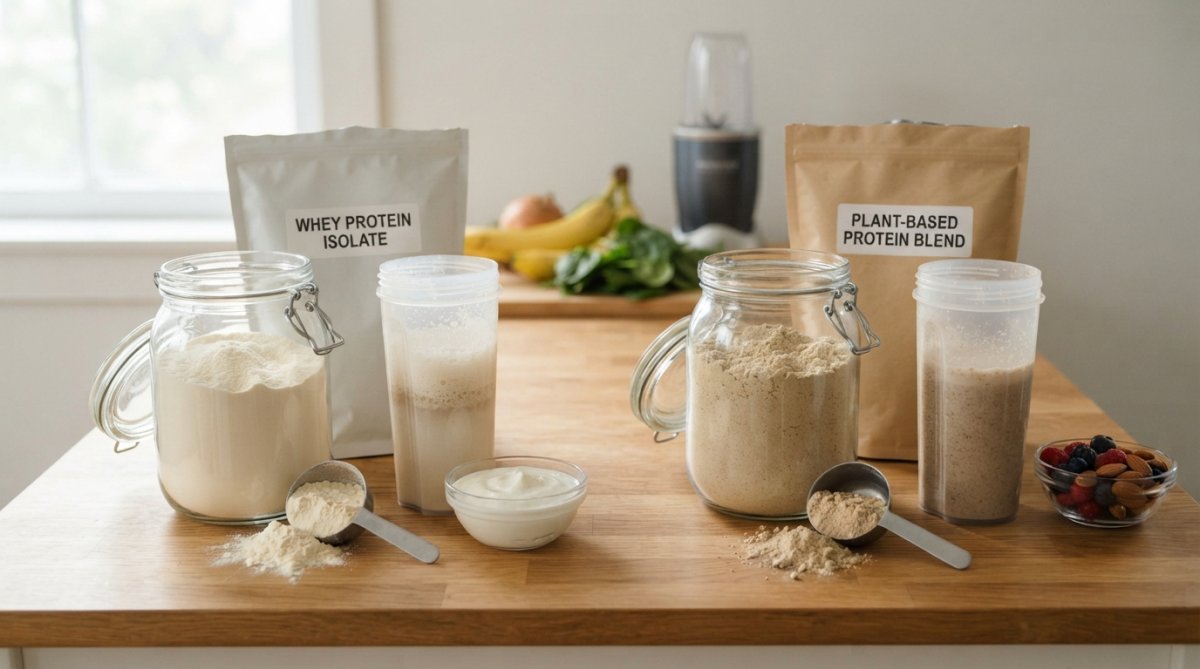
Whey protein works for weight loss, but so do chicken, fish, eggs, Greek yogurt, cottage cheese, and plant-based options. The choice isn't about which is "best", it's about which fits your life, budget, and goals. Here's how they actually compare.
Direct Comparison: Satiety, Cost, and Convenience
Whey Protein Powder
- Satiety: 25-30g serving keeps you full 2-3 hours (liquid, absorbed quickly)
- Preparation time: 2 minutes
- Micronutrients: Minimal; mostly just protein
- Best for: Busy mornings, post-workout, hitting protein targets when whole foods aren't practical
- Trade-off: Liquid meals are less satiating than solid food
Chicken Breast
- Satiety: 25-30g serving keeps you full 3-4 hours (solid food, chewing time adds satiety)
- Preparation time: 20-30 minutes
- Micronutrients: High in B vitamins, selenium, niacin
- Best for: Main meals, people who enjoy cooking, those seeking whole-food nutrition
- Trade-off: Requires planning and cooking
Eggs
- Satiety: 25-30g protein requires 3-4 whole eggs; very satiating due to fat and solid form
- Preparation time: 10 minutes
- Micronutrients: Choline, lutein, complete amino acid profile
- Best for: Breakfast, people who want whole-food satiety without cooking meat
- Trade-off: Higher calorie density than chicken
Greek Yogurt
- Satiety: 25-30g protein in ~1 cup; moderately satiating
- Preparation time: 0 minutes
- Micronutrients: Probiotics, calcium, B vitamins
- Best for: Snacks, breakfast, people who want convenience without a shake
- Trade-off: Flavored varieties are high in sugar
Cottage Cheese
- Satiety: 25-30g protein in ~1 cup; highly satiating (casein digests slowly)
- Preparation time: 0 minutes
- Micronutrients: Calcium, B vitamins
- Best for: Snacks, dessert-like meals, people who want sustained fullness
- Trade-off: Texture is polarizing; not ideal post-workout
Plant-Based Protein (Tofu, Tempeh, Legumes)
- Satiety: 25-30g protein requires larger portions; moderate satiety
- Preparation time: 15-25 minutes
- Micronutrients: Fiber, iron, magnesium
- Best for: Vegans, vegetarians, people seeking plant-based nutrition
- Trade-off: Requires higher volume to hit protein targets
Which Source Is Right for Your Situation?
Choose whey protein if:
- You're busy and struggle to hit your protein target with whole foods
- You want the fastest, most convenient option for breakfast or post-workout
- You're lactose tolerant and don't have a dairy allergy
- You want to minimize meal prep time while staying in your calorie deficit
Choose whole-food sources if:
- You enjoy cooking and have time to prepare meals
- You want the satiety advantage of solid food (chewing, slower digestion)
- You want additional micronutrients beyond protein
- You're lactose intolerant or have a dairy allergy
- You want to build cooking skills and food literacy alongside your fitness goals
Use a combination if:
- You want convenience for some meals and whole-food satiety for others
- You want to spread your protein across different sources for variety and micronutrient density
- You're returning to fitness and want to reduce friction on some days while building habits on others
Whey Concentrate, Isolate, and Hydrolysate
If you choose whey, you'll encounter three processing levels. For weight loss, the differences are minimal, but they matter for cost and digestive tolerance.
Whey Concentrate contains 70-80% protein by weight with more lactose and fat remaining. It's the cheapest option and tastes better to most people. For weight loss, the extra carbs and fat per serving are negligible.
Whey Isolate is processed to remove lactose and fat, leaving 90%+ protein. It costs more than concentrate. For weight loss, the advantage is minimal. If you're lactose intolerant, isolate makes sense. Otherwise, concentrate works fine.
Whey Hydrolysate is pre-broken-down protein for faster absorption. It's the most expensive and tastes worst to most people. For weight loss, faster absorption provides no advantage.
| Type | Protein % | Lactose | Best For | Weight Loss Advantage |
|---|---|---|---|---|
| Concentrate | 70-80% | Higher | Budget-conscious shoppers | None vs. isolate |
| Isolate | 90%+ | Minimal | Lactose-sensitive people | Slightly lower carbs |
| Hydrolysate | 95%+ | None | Competitive athletes | None for weight loss |
The Bottom Line: Consistency Beats Perfection
For weight loss, the best protein source is the one you'll actually use consistently. If whey shakes fit your schedule, they're worth it. If you hate the taste or feel unsatisfied, whole foods will work better because you'll stick with them. The difference isn't the source; it's showing up consistently and hitting your protein target.
Potential Downsides and Who Should Use Caution
Whey protein isn't harmful for most people, but it's not right for everyone. Lactose intolerance, dairy allergies, and digestive sensitivity are real concerns. People with lactose intolerance should choose isolate or hydrolysate, or switch to plant-based protein.
Is whey protein worth it for weight loss? Yes, if convenience is your bottleneck. If you're busy, travel frequently, or struggle to hit your protein target with whole foods, whey protein makes consistency easier and costs less than buying prepared meals.
The real value of whey isn't the protein, it's the permission to start. At Body Fuel Fury, we've seen people succeed with whey shakes and people succeed without them. The difference isn't the supplement; it's showing up consistently.
Frequently Asked Questions
Can you lose weight by replacing a meal with a whey protein shake?
Yes, whey protein shakes can replace a meal if they contain enough calories and nutrients to keep you satisfied until your next meal. A typical shake with 25-30 grams of whey protein, added carbohydrates, and healthy fats can work as a calorie-controlled meal replacement. However, whole foods often provide more fiber and micronutrients, so using shakes occasionally rather than as your primary meals tends to work better for long-term adherence and overall nutrition.
How much whey protein should you have while trying to lose weight?
Most research suggests 0.7 to 1 gram of protein per pound of body weight daily during weight loss. For a 180-pound person, that's roughly 126-180 grams of protein per day. Whey protein can provide 20-30 grams per serving, making it a convenient way to hit your daily target. Spread protein intake across meals and snacks rather than consuming it all at once to maintain steady fullness and muscle support throughout the day.
Will whey protein help me lose belly fat?
Whey protein doesn't target fat loss in specific areas like the belly. However, it can support overall fat loss when combined with a calorie deficit and resistance training. Protein helps preserve muscle mass while you lose weight, which maintains your metabolism and body composition. The satiety effect of whey may also reduce overall food intake, making it easier to maintain the calorie deficit needed for belly fat reduction.
Is whey protein better than whole-food protein for weight loss?
Both whey and whole foods like chicken, eggs, and Greek yogurt support weight loss effectively. Whey is more convenient and faster to consume, making it easier to hit protein targets on busy days. Whole foods provide more fiber, vitamins, and minerals that whey alone doesn't contain. The best approach combines both: use whey protein for convenience and whole foods for nutritional completeness and long-term diet adherence.