 comparison
Whey Protein vs Plant Protein for Muscle Recovery (2026)
Table of Contents
- Whey Protein vs Plant Protein for Muscle Recovery: Which Builds Muscle Faster?
- Amino Acid Profile of Plant vs Whey Protein: The Leucine Difference
- Digestibility of Plant-Based Protein Powders vs Whey
- Post-Workout Nutrition Timing: How Protein Source Changes the Clock
- Cost-Per-Gram Analysis and What You Actually Pay For
- How to Choose: Whey vs Plant for Your Recovery Goals
- The Bottom Line on Whey and Plant Protein
- Frequently Asked Questions
Last Updated: September 6, 2026
Whey Protein vs Plant Protein for Muscle Recovery: Which Builds Muscle Faster?
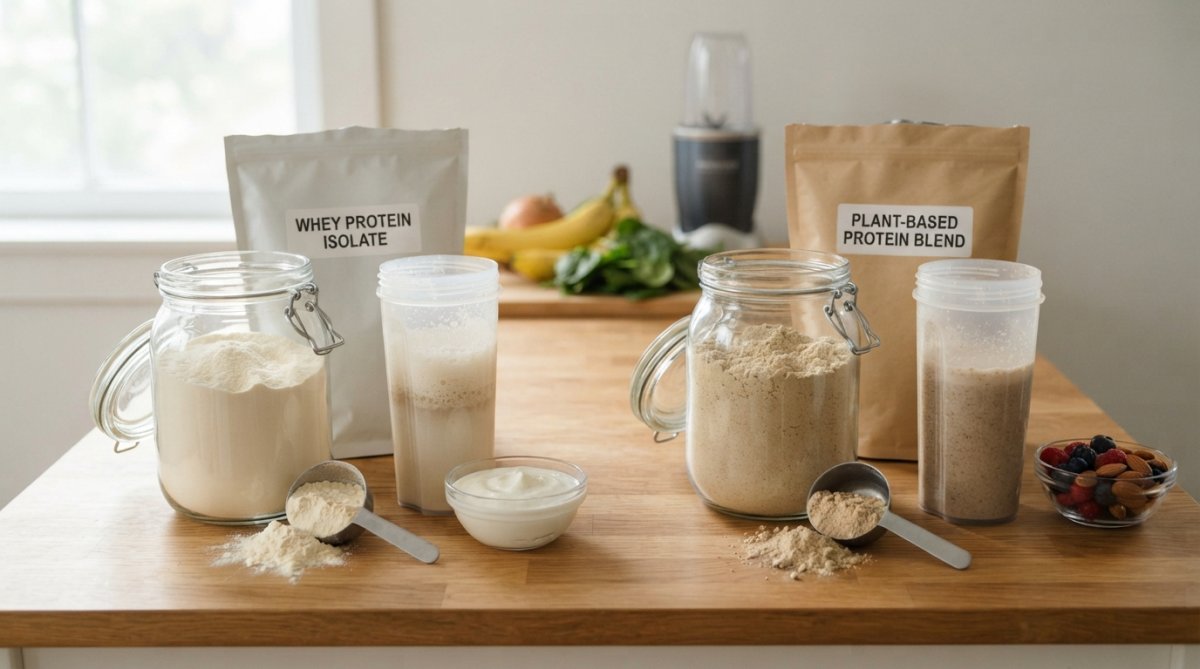
The whey protein vs plant protein debate for muscle recovery comes down to one question: can plant-based powders deliver the same anabolic response as dairy-derived whey? For most athletes, the answer is yes, provided the plant product is formulated correctly. Whey protein is a complete protein derived from milk, while plant protein is typically blended from sources like pea, brown rice, and soy to create a complete amino acid profile. We have analyzed both categories extensively to help you decide which supports your recovery goals without wasting money.
The evidence favoring whey is real, but it is narrower than most marketing suggests. Whey isolate and concentrate are fast-digesting and rich in leucine, the amino acid that triggers muscle protein synthesis. Plant blends have closed much of that gap, but only when they contain enough leucine per serving. A common mistake is assuming all 20-plus grams of protein are equal; the leucine content is what actually drives the recovery response.
Below, we will break down the amino acid differences, digestibility, timing, and true cost per gram so you can pick the right powder for your training.
Amino Acid Profile of Plant vs Whey Protein: The Leucine Difference
The amino acid profile of plant vs whey protein is often reduced to a simple 'whey is complete, plants are not.' That framing is outdated. The real differentiator is not just completeness, but the concentration of leucine, the branched-chain amino acid that directly activates the mTOR signaling pathway, the primary driver of muscle protein synthesis (MPS).
Whey protein isolate typically delivers 2.6 to 3.2 grams of leucine per 25-gram scoop (peer-reviewed research). This is a deliberate formulation choice: research in sports nutrition has established a per-meal leucine threshold of roughly 2 to 3 grams to maximally stimulate MPS in most individuals. Below that threshold, the anabolic response is blunted, regardless of total protein intake.
Single-source plant proteins rarely meet this threshold on their own. Pea protein, for example, contains about 1.8 grams of leucine per 25-gram serving, while brown rice protein provides closer to 1.5 grams (PubMed). This is why the 'incomplete protein' myth persists, but the modern solution is not simply combining sources; it is engineering blends to hit a specific leucine target.
Here is the nuance most guides miss: a blend of pea and rice protein is not automatically superior to a single source. The blend only works if the final product delivers enough leucine per scoop. Many commercial plant blends still fall short, listing 20 grams of protein but only 1.2 to 1.5 grams of leucine. That is a suboptimal dose for triggering MPS.
To compensate for lower leucine density, some athletes add a free-form leucine supplement to a plant shake, or simply increase the serving size of the plant powder. For example, if a plant blend provides 1.5 grams of leucine per 25-gram scoop, using a 35-gram scoop (providing roughly 2.1 grams of leucine) may bring it closer to the MPS threshold, though this also increases caloric intake.
The practical takeaway is that the amino acid profile is not a fixed property of 'plant protein' as a category. It is a formulation variable. Whey isolate is consistently high in leucine; plant blends are inconsistent. The informed consumer checks the label for leucine, not just total protein, and adjusts serving size or supplementation accordingly.
Digestibility of Plant-Based Protein Powders vs Whey
Digestibility of plant-based protein powders vs whey separates into two issues: absorption speed and gut comfort. Whey isolate is absorbed rapidly, making it the historical default for post-workout shakes. Plant proteins digest more slowly due to fiber and anti-nutrients, but this is not necessarily a disadvantage for recovery lasting several hours.
For athletes with lactose sensitivity, plant-based options eliminate the gastrointestinal distress that whey concentrate can cause. Whey isolate removes most lactose, yet trace amounts remain. Vegan-friendly powders such as Vega Sport and Orgain are naturally lactose-free, which is why many users report better consistency with digestion. The trade-off is texture; plant powders are often grittier than whey, and some require more shaking or blending to mix smoothly.
| Protein Type | Key Amino Acids | Digestive Comfort | Best For |
|---|---|---|---|
| Whey Isolate | High leucine, complete | Fast, minimal lactose | Rapid post-workout recovery |
| Whey Concentrate | Complete, lower leucine | Slower, more lactose | Budget-friendly dairy tolerance |
| Pea Protein | High arginine, lower leucine | Gentle, lactose-free | Vegan athletes, digestion |
| Rice Protein | Low lysine, moderate leucine | Very gentle | Hypoallergenic needs |
| Plant Blends | Complete when combined | Gentle, lactose-free | Daily vegan supplementation |
Post-Workout Nutrition Timing: How Protein Source Changes the Clock
Post-workout nutrition timing changes when you switch from whey to plant protein. Whey's rapid absorption suits the classic "anabolic window" of 30 to 60 minutes after training (acsm.org). Plant proteins digest slower, which means the practical window extends to two to three hours without sacrificing recovery outcomes.
The nuance most guides miss is that total daily protein intake matters more than timing for most lifters. If you consume adequate protein across the day, the difference between a whey shake immediately after training and a plant shake an hour later is negligible for muscle hypertrophy. Competitive athletes, however, may prefer whey isolate for its speed, or a product like Vega Sport that adds tart cherry and turmeric for additional recovery support.
Cost-Per-Gram Analysis and What You Actually Pay For
Cost-per-gram analysis is the most practical way to compare protein powders, yet most articles avoid the math. The price on the tub is meaningless without dividing it by the total grams of protein inside. Here is how the economics actually break down across typical product tiers in the U.S. market.
A standard 2-pound (907-gram) tub of whey concentrate, priced around $30, contains roughly 30 servings of 25 grams (750 grams of total protein). That works out to approximately $0.04 per gram of protein. A premium whey isolate, such as a 5-pound tub priced at $80, may contain 75 servings of 25 grams (1,875 grams of protein), which is also about $0.04 per gram, despite the higher upfront cost.
On the plant side, the math is often less favorable. A 1.6-pound (725-gram) tub of a popular plant blend, priced at $35, might contain only 20 servings of 25 grams (500 grams of protein). That is $0.07 per gram, nearly double the cost of budget whey. The issue is not that plant proteins are inherently expensive; it is that many blends use lower-density ingredients and larger scoop sizes to compensate for incomplete amino acid profiles, driving up the per-gram cost.
There are exceptions. Some plant blends, particularly those using pea protein isolate as the primary source, can achieve a cost-per-gram closer to $0.05. The trade-off is often in added ingredients: digestive enzymes, flavoring systems, and adaptogens all add cost without adding protein. A clean-label plant blend with minimal additives is frequently cheaper per gram than one loaded with 'recovery complexes.'
A common pattern is that the cost gap narrows when you factor in digestive comfort. If whey concentrate causes bloating or gastrointestinal distress, the effective cost of whey includes the discomfort and potential missed workouts. For those users, a slightly higher per-gram cost for a plant blend is a practical investment in consistency.
For budget-conscious athletes, the most cost-effective strategy is to buy unflavored bulk pea or rice protein isolate, which typically retails around $0.03 to $0.04 per gram, and mix it with a small amount of whey or a free-form leucine supplement to hit the MPS threshold. This approach offers the lowest cost per gram while addressing the leucine gap discussed earlier.
How to Choose: Whey vs Plant for Your Recovery Goals
Choosing between whey and plant protein for recovery comes down to three factors: leucine content, digestive tolerance, and dietary preference. Whey isolate is the best choice for athletes who want the fastest absorption and highest leucine per scoop, particularly in a competitive setting where every edge counts. Plant blends are the better option for vegans, those with lactose intolerance, or anyone who experiences bloating from dairy.
For most recreational lifters, the difference in muscle growth between equal leucine doses of whey and plant protein is minor. What matters is consistency. A plant protein you digest comfortably and drink daily outperforms a whey isolate you avoid due to stomach issues. Our customer service team can help match a powder to your training volume and dietary needs.
The Bottom Line on Whey and Plant Protein
The bottom line is that neither source is universally superior for muscle recovery. Whey protein isolate remains the gold standard for rapid, complete amino acid delivery, backed by decades of research on muscle protein synthesis. Plant-based blends have evolved to the point where they match whey's anabolic potential when formulated with sufficient leucine from complementary sources like pea and rice.
Your decision should rest on digestion, ethics, and budget, not marketing claims. If dairy sits well with you and you want maximum convenience, choose a third-party tested whey isolate. If you are vegan or lactose-sensitive, a high-quality plant blend with at least 2 grams of leucine per serving will support your recovery effectively. We offer affordable, quality-checked options in both categories, so you can train hard and recover without compromise.
Frequently Asked Questions
Are plant proteins as effective as whey for muscle protein synthesis?
Yes, when you hit the right leucine threshold. Whey naturally contains about 8-11% leucine, an amino acid that triggers muscle protein synthesis. Most single-source plant proteins like pea or rice contain less. Blended plant proteins that combine pea and rice or add extra leucine can match whey's anabolic response. Look for plant blends that provide at least 2-3 grams of leucine per serving.
Why might an athlete choose to stay away from whey protein?
Lactose intolerance is the most common reason. Whey concentrate contains lactose, which causes gastrointestinal distress, bloating, and discomfort for many people. Whey isolate removes most but not all lactose. Others avoid whey for vegan or vegetarian dietary preferences. Some athletes also report that dairy proteins trigger skin issues or inflammation. Plant-based options like pea, soy, and rice protein provide a lactose-free alternative.
Can I build muscle with plant protein as effectively as with whey?
Research shows you can, but you need to be more deliberate. Plant proteins have less leucine per gram and digest slightly slower than whey. To match whey's muscle-building effect, consume more total protein per serving or choose a blend with added leucine. Total daily protein intake matters more than the source. Spread 1.6-2.2 grams per kilogram of body weight across 3-4 meals for optimal muscle hypertrophy.
Is there a difference in absorption speed between whey and plant protein?
Yes. Whey is a fast-digesting protein, with amino acids peaking in your bloodstream within 30-60 minutes. This makes it ideal immediately after training. Plant proteins digest more slowly, with pea protein peaking around 60-90 minutes and rice protein taking longer. This difference matters less than total daily intake. For post-workout recovery, both work if consumed within a few hours of training.
Choosing the right protein powder is a personal decision shaped by your digestion, your training schedule, and your values. Body Fuel Fury simplifies that choice with a fast, user-friendly shopping experience backed by years of industry experience and a customer-service-oriented team. Shop our supplement selection today and find a protein powder that fits your recovery routine and your budget.