 listicle
18 Inch Plyo Box Review: Best Picks for Home Gyms
Table of Contents
- Quick Comparison: Top 18 Inch Plyo Boxes
- How We Evaluated These Plyo Boxes
- Titan Fitness 18" Pro-Duty Plyometric Box Review
- VEVOR 18 Inch Plyometric Jump Box Review
- Power Systems Foam Plyobox (18-Inch) Review
- Pinnacle Foam 3-Tier Plyo Box Review
- Foam Plyo Box Benefits: Why Soft-Sided Boxes Reduce Injury Risk
- How to Choose a Plyo Box Height for Your Training Goals
- Frequently Asked Questions
Last Updated: September 17, 2026
Quick Comparison: Top 18 Inch Plyo Boxes
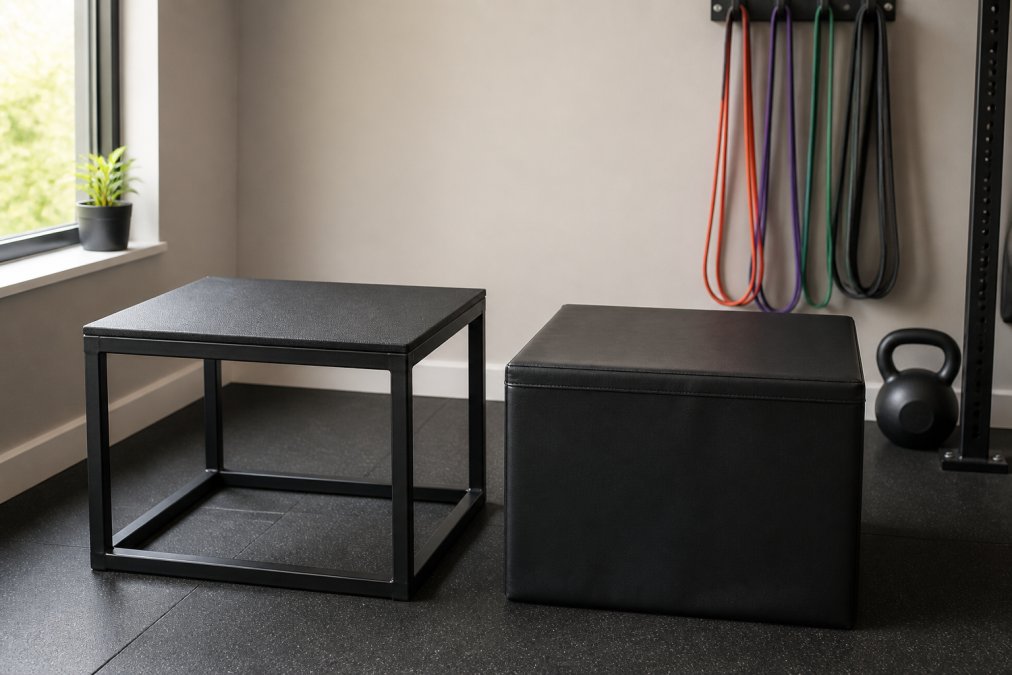
An 18 inch plyo box is the standard mid-height platform for box jumps, step-ups, and explosive power work. Sitting between the 12-inch and 24-inch options, it's the most versatile single height most people can buy.
| Box | Price | Material | Best For |
|---|---|---|---|
| Titan Fitness 18" Pro-Duty | $89.97 | Steel | Heavy athletes, permanent setups |
| VEVOR 18 Inch Jump Box | $60.00 | Steel | Budget home gyms |
| Power Systems Foam Plyobox | $120.00 | High-density foam | Beginners, high-volume jumpers |
| Pinnacle Foam 3-Tier | $785.00 | Foam, modular | Commercial gyms, multi-height needs |
How We Evaluated These Plyo Boxes
We judged each box on five criteria that matter for real training:

- Base stability: Does it shift or slide during repeated jumps?
- Landing surface: How much grip does the top provide, and how does it treat a missed jump?
- Weight capacity and durability: Will it hold up to daily use over years?
- Storage and footprint: Can it be stacked, moved, or tucked away?
- Value: Does the price match what you actually get?
Titan Fitness 18" Pro-Duty Plyometric Box Review
Titan's Pro-Duty box is the pick for anyone who wants a platform that outlasts their gym membership. Its welded steel frame and non-slip rubber surface grip well even when your shoes are damp.
VEVOR 18 Inch Plyometric Jump Box Review
VEVOR's box is the value play. At $60.00, it's the cheapest steel option here, with a powder-coated frame, anti-slip rubber top, and tapered base.
Power Systems Foam Plyobox (18-Inch) Review
This is the box I'd hand a beginner without hesitation. The high-density foam core is structured enough to jump on confidently, while the soft exterior absorbs impact if you catch the edge.
Pinnacle Foam 3-Tier Plyo Box Review
The Pinnacle system is the most versatile option here, and the most expensive by a wide margin. Its modular design stacks 6, 12, and 18-inch tiers, three heights in one package.
Foam Plyo Box Benefits: Why Soft-Sided Boxes Reduce Injury Risk
Most plyo box content stops at "foam is softer, so it hurts less." True, but it doesn't explain why soft-sided boxes change the mechanics of a missed jump. Once you understand the mechanism, foam-versus-steel stops being a matter of taste.

What actually happens when you miss a jump
A box jump has two outcomes: you land on top, or you don't. The second is where box material matters most, and it plays out in fractions of a second.
The landing mechanics that matter more than the box
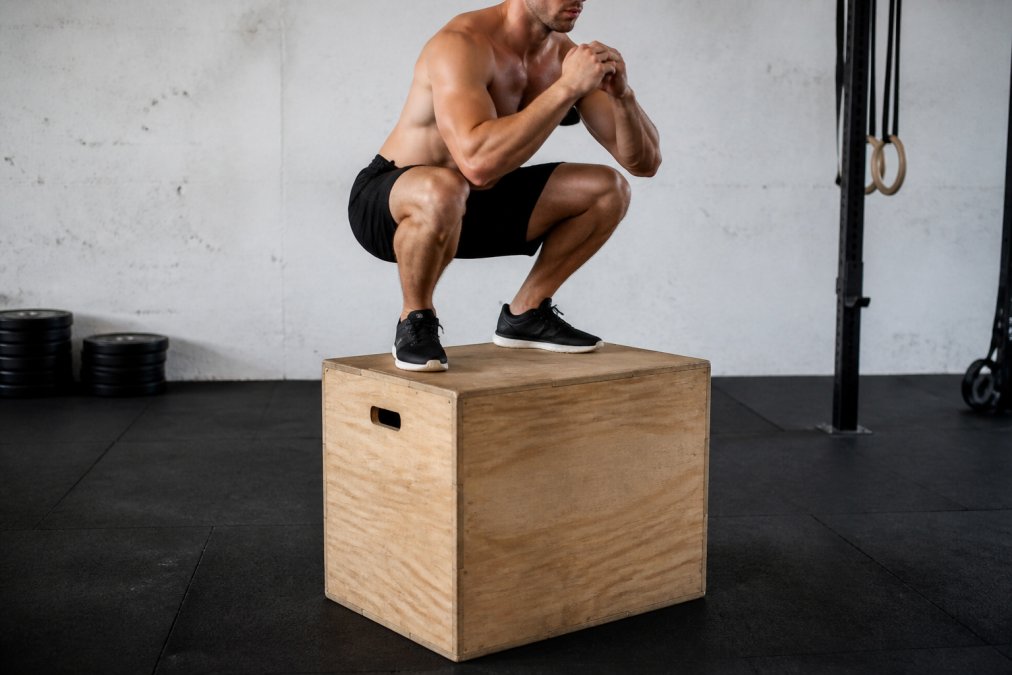
Here's the part competitors skip: the box material is your backup plan, not your primary protection. Your landing mechanics are. A safe box jump landing looks like this:
- Hips back, chest forward. You sit into the landing the way you'd sit into a squat, rather than landing upright and stiff.
- Knees track over the toes. They shouldn't collapse inward. If they do, the box is too high or you're fatigued.
- Quiet feet. A loud landing means you're absorbing force with your joints instead of your muscles. Aim for a landing you can barely hear.
- Full foot contact. Landing on the balls of your feet and staying there loads the calves and Achilles. Let the heel come down so the whole foot shares the work.
Why foam is the better learning tool
If your mechanics aren't dialed in yet, foam gives you a margin for error steel doesn't, worth more during the learning phase than any spec on a product page.
- Missed jumps are survivable. A shin scrape on foam is a bruise. On steel, it can be a deep cut or a joint jolt.
- High-volume work is gentler. If you're doing 100+ jumps per week as part of a conditioning block, the cumulative impact on ankles, knees, and shins adds up. Foam reduces the per-rep load.
- It's quieter and lighter. Foam boxes don't clang, and you can move them one-handed. That matters in an apartment, a shared garage, or a circuit where you're switching stations every 60 seconds.
- It doubles as a soft surface for other work. Step-ups, split squats, and elevated push-ups all feel better on a foam edge than a steel one.
Where steel still wins
Foam flexes under load. A very heavy or powerful athlete can feel that give at landing, and some find it distracting. Steel doesn't flex, compress, or wear out at the edges. If your mechanics are solid and you want maximum stability for heavy, low-rep power work, steel is the better tool.
Box material is your safety net, not your safety system. Fix your landing mechanics first, then choose the box that matches how you train. Foam buys you forgiveness while you learn; steel rewards you once you've learned.
How to Choose a Plyo Box Height for Your Training Goals
Learning how to choose a plyo box height starts with your current ability, not your ambition. Pick a height you can land on softly and controlled every rep. If you can't, it's too high, no matter what a program says.
The height ladder, and what each rung is actually for
- 12 inches: Beginners, anyone returning from a lower-body injury, and anyone still learning landing mechanics. This is a teaching height, not a training height. You're here to build the habit of quiet, controlled landings.
- 18 inches: Intermediate lifters who can land softly and consistently at 12 inches across multiple sets. This is where real power development starts, and where most people should spend the bulk of their box jump career.
- 24 inches and up: Advanced athletes with solid landing mechanics, no knee or ankle issues, and a reason to chase max height. Most home lifters never need to go here.
The five-jump test (and why five isn't arbitrary)
A practical test: perform five jumps at your current height. If all five landings feel controlled and quiet, move up. If any feels heavy or off-balance, stay put for a few weeks.
A progressive overload plan for earning 18 inches
This is the part most box jump content skips. You don't graduate from 12 to 18 by jumping higher, you graduate by getting stronger and more explosive at 12, then carrying that capacity up. A simple four-week block:
- Weeks 1-2: Three sets of five box jumps at 12 inches, twice per week. Focus entirely on landing quality. Add a set of five step-ups onto the same box for volume without the impact.
- Weeks 3-4: Three sets of five at 12 inches, plus two sets of three at 18 inches. Keep the 18-inch sets low-rep and stop the moment a landing feels heavy. The 12-inch work is your volume; the 18-inch work is your exposure.
- After four weeks: If all 18-inch landings are quiet and controlled, flip the ratio, make 18 inches your working height and drop 12 inches to a warm-up.
How 18 inches fits into a weekly program
An 18 inch plyo box earns its place in three slots, and knowing which one you're filling changes your rep count:
- Power day: Low reps, full recovery. Three to five sets of three to five jumps, resting 60-90 seconds between sets. Quality over quantity. Stop when landings get sloppy.
- Conditioning circuit: Higher reps, shorter rest. Ten to fifteen jumps per round as part of a circuit with step-ups, kettlebell swings, and carries. This is where the 18-inch height shines for general fitness.
- Step-up and accessory work: The 18-inch height is a comfortable step-up height for most lifters, which makes it useful for unilateral leg work, split squats, and elevated push-ups, no jumping required.
When to move up, and when to move down
Move up when five clean landings at your current height feel routine for two consecutive sessions. Move down when any of these appear:
- A landing that feels heavy or loud
- Knee collapse on landing
- Heels slamming down hard
- Any tweak in the shin, ankle, or knee
Frequently Asked Questions
Is an 18 inch plyo box suitable for home workouts?
An 18 inch plyo box works well for most home gyms because it suits intermediate box jumps, step-ups, and decline push-ups without taking up much floor space. It is tall enough to build explosive power but still manageable for athletes who have mastered a 12-inch box. Just check the weight capacity and base stability before buying, and make sure you have at least 3 feet of clear landing area around it.
What are the foam plyo box benefits compared to steel or wood?
Foam plyo boxes have a softer landing surface, which reduces the risk of shin scrapes and bruising if you miss a jump. High-density foam with a vinyl cover also absorbs impact and is easier on the joints during high-volume training. The trade-off is that foam can feel slightly less stable than steel, so check the weight limit and stack them on a flat, non-slip surface.
How do I choose a plyo box height for my fitness level?
Start with a box height you can clear with a solid landing and full hip extension. Beginners often begin at 12 inches, intermediates at 18 to 20 inches, and advanced athletes at 24 inches or higher. If your knees collapse inward or you land in a deep squat, the box is too tall. An 18 inch plyo box is a versatile middle ground for most home gym users.
What should I look for in a durable plyo box?
Check the weight capacity, frame material, and landing surface first. Steel boxes with a powder coating and non-slip rubber top handle heavy use, while high-density foam with a synthetic leather cover resists tearing. Look for a stackable design if space is tight, and confirm the base stability by reading customer reviews about wobble or bolt loosening over time.
Can I use an 18 inch plyo box for strength training exercises?
Yes. Beyond box jumps, an 18 inch plyo box works for step-ups, split squats, decline push-ups, tricep dips, and elevated planks. The height adds range of motion for lower body power and lets you adjust difficulty without extra equipment. Just make sure the box is rated for your body weight plus any added load, and place it on a non-slip surface before starting.