 listicle
Best Home Gym Flooring for Noise Reduction in 2026
Table of Contents
- Quick Comparison: Best Home Gym Flooring for Noise Reduction
- How We Evaluated These Flooring Options
- Rubber Gym Floor Tiles vs Rolls: Which Cuts Noise Better?
- Best Thickness for Weightlifting Mats and Noise Control
- How to Soundproof a Home Gym Floor in Apartments and Upper Rooms
- Frequently Asked Questions
Last Updated: September 20, 2026
Quick Comparison: Best Home Gym Flooring for Noise Reduction
The best gym flooring noise reduction options are high-density rubber tiles and rolls, with thickness and density mattering more than brand. This guide breaks down what actually absorbs impact, what just looks the part, and which setups keep the downstairs neighbors calm.
Here is the short version before we get into the details.
| Option | Typical Thickness | Noise Reduction | Best For |
|---|---|---|---|
| Vulcanized rubber stall mats | 3/4 in | High | Heavy barbell work |
| Rubber rolls | 8mm+ | High | Full-room coverage |
| Interlocking rubber tiles | Varies | Moderate to high | Basements, modular setups |
| Acoustic underlayment | Varies | Adds a layer | Apartments, upper floors |
| EVA foam tiles | Varies | Low | Yoga, bodyweight only |
Rubber wins on impact absorption almost every time. Foam is comfortable but does little once weight plates start moving. The real decision comes down to how heavy you lift and where the room sits in the building.
How We Evaluated These Flooring Options
We judged each option on four things: density, thickness, installation effort, and how well it decouples impact from the structure underneath. For gym flooring noise reduction, density matters most. A dense mat spreads the force of a dropped barbell across a wider area, which reduces the vibration that travels into joists and walls.
A common mistake is buying the cheapest foam tiles and expecting them to handle deadlifts. They will not. Foam compresses under load and passes the shock straight through, and the tiles dent permanently within weeks.
We also weighed practical factors. Installation time, odor, weight, and how easy each option is to replace matter as much as the sound numbers. A mat you dread moving is a mat you will not install well.
Rubber Gym Floor Tiles vs Rolls: Which Cuts Noise Better?
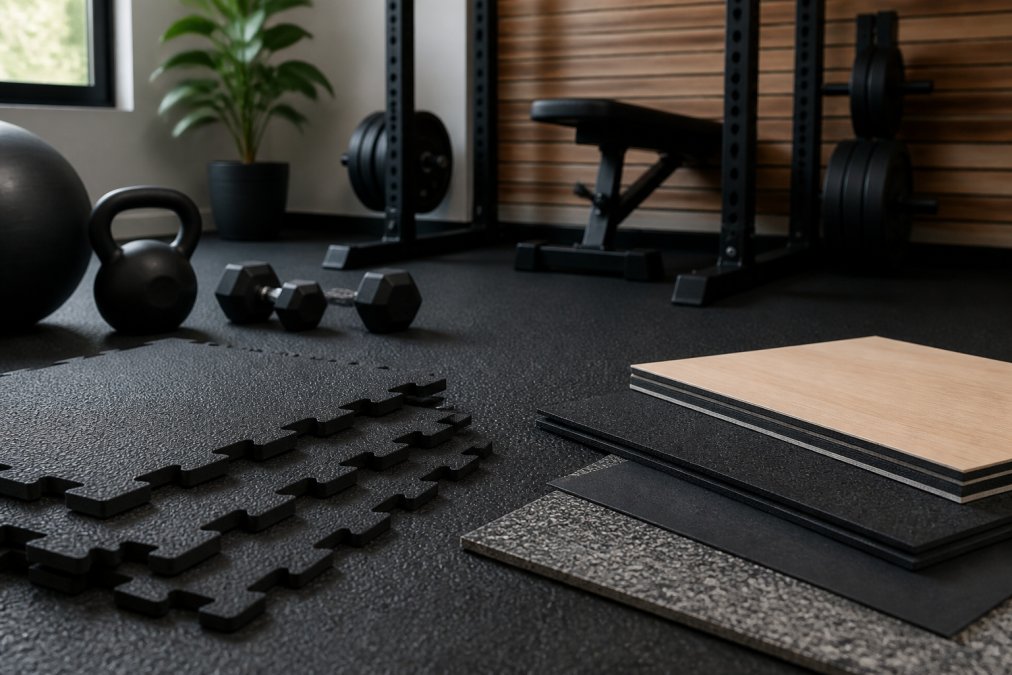
Rubber gym floor tiles vs rolls comes down to seams versus coverage. Rolls cut noise slightly better because a seamless surface transmits less vibration across joints, while tiles are easier to install and replace one piece at a time.
Rolls win on performance. A single continuous sheet has no gaps for impact energy to concentrate around, and the lack of seams means fewer spots where edges lift or curl. The tradeoff is installation. Rolls are heavy, usually need adhesive or double-sided tape, and are difficult to cut cleanly without the right tools.
Tiles win on flexibility. If one section wears out or gets damaged, you swap a single tile instead of replacing a whole run. Interlocking designs like the shark tooth style hold together well, though the seams can collect dust and the field can shift over time if you do not border the edges.
For a dedicated room where you lift heavy, rolls are the better long-term pick. For a garage or basement where you may rearrange equipment, tiles give you room to change your mind.
Best Thickness for Weightlifting Mats and Noise Control
The best thickness for weightlifting mats is 3/4 inch for heavy barbell work and 8mm or more for general gym use. Thicker and denser together is what cuts noise. Thickness alone does not do it if the material is soft.
Here is how the common options stack up.
- 3/4 inch vulcanized rubber: the standard for garage gyms and heavy drops. Dense, heavy, and hard to move, but it absorbs serious impact.
- 8mm and up rubber rolls: good for full-room coverage where you want a clean surface and consistent dampening.
- Interlocking rubber tiles: thickness varies, so check the spec. Mid-range tiles handle moderate weights well.
- Acoustic underlayment: a thin high-density layer beneath your top surface that adds vibration absorption without much bulk.
- EVA foam: fine for yoga and bodyweight, not for plates.
A thicker mat does raise the floor. Account for that if your rack, bench, or door clearance is tight. Underlayment adds height too, so measure before you commit.
How to Soundproof a Home Gym Floor in Apartments and Upper Rooms
Learning how to soundproof a home gym floor in an apartment starts with layers, not a single mat. You are managing two things: airborne noise, like the clang of plates, and impact noise, the thud that travels through the structure into the unit below.
The layered approach works best:
- Add a decoupling layer. A high-density acoustic underlayment beneath your top flooring breaks the direct path between impact and the joists.
- Use dense rubber on top. A 3/4 inch mat or an 8mm roll absorbs the strike itself.
- Cover the full workout zone. Small mats under the rack leave the rest of the floor bare and the noise path open.
- Border the edges. Loose tiles shift, and shifting tiles rattle.
- Control the drops. Lower weights under control and use bumper plates where you can.
Airborne noise needs a different fix. Rubber does little for the sound of a barbell clanging, so keep plates secured and consider a platform if you train heavy.
If you are building out a home gym from scratch, Body Fuel Fury carries the equipment and gear that pair with a proper floor setup, backed by a fast, user-friendly, and customer-service-oriented shopping experience and value-driven, affordable pricing. Start with the floor, then build up. Once the foundation is secure, integrating the right essential fitness gear ensures that your training space remains both versatile and quiet during even the most intense sessions.
Frequently Asked Questions
What is the best flooring for a home gym to reduce noise?
Thick rubber flooring, such as 3/4-inch vulcanized rubber mats or 8mm+ rubber rolls, is the most effective for gym flooring noise reduction because it absorbs both impact and vibration. Pairing a rubber top layer with an acoustic underlayment can further reduce sound transmission to rooms below. Foam tiles are quieter underfoot but compress and lose effectiveness with heavy weights.
Does rubber flooring really reduce gym noise?
Yes. Rubber is dense and elastic, so it absorbs the energy from dropped weights and footsteps instead of letting it travel through the floor structure. A 3/4-inch rubber mat is thick enough to noticeably muffle barbell drops, while thinner 8mm rolls handle moderate noise. For maximum effect, add an underlayment layer beneath the rubber.
How thick should gym mats be for soundproofing?
For general weightlifting and cardio, 8mm to 3/4-inch rubber is the sweet spot. If you drop heavy barbells regularly, aim for 3/4-inch (about 19mm) or thicker. Thinner foam mats (1/2-inch) work for yoga and bodyweight work but won't stop impact noise from weights. The best thickness for weightlifting mats depends on your heaviest lift and whether you're on a ground floor or upper level.
Can I put gym flooring over carpet to reduce noise?
Yes, you can install rubber tiles or rolls over low-pile carpet, but the carpet padding may make the surface feel less stable. For best results, place a plywood subfloor over the carpet first, then lay rubber flooring on top. This adds rigidity and improves noise reduction. If you're renting, interlocking rubber tiles are easier to remove without damaging the carpet.
What is the difference between gym tiles and rolls for noise control?
Tiles come in interlocking squares and are easier to install, replace, and move, but seams can let some noise escape. Rolls create a seamless surface that blocks more noise and looks cleaner, but they require adhesive or tape and are harder to remove. For apartment gyms, tiles are more practical; for dedicated home gyms, rolls offer better sound dampening and a professional finish.