 listicle
5 Best Protein Powder Brands for Beginners 2026
Table of Contents
- How We Selected These 5 Protein Powder Brands for Beginners
- Quick Comparison: Top 5 Protein Powders for Beginners
- The 5 Best Protein Powder Brands for Beginners in 2026
- 1. Optimum Nutrition Gold Standard 100% Whey, Best Overall for Beginners
- 2. Myprotein Impact Whey, Best Budget Pick
- 3. Transparent Labs 100% Grass-Fed Whey Isolate, Best Clean Label Option
- 4. Garden of Life Sport Organic Plant-Based Protein, Best for Dairy-Free Beginners
- 5. Dymatize ISO100 Hydrolyzed, Best for Sensitive Stomachs
- Whey vs Plant Protein for Muscle Gain: What Beginners Need to Know
- How to Choose Protein Powder for Beginners: A Simple Framework
- Protein Powder Dosage for Beginners: How Much Do You Actually Need?
- Beating Flavor Fatigue: Mixability Tips and Protein Powder Baking Ideas
- Frequently Asked Questions
Last Updated: August 27, 2026
Picking the right protein powder as a beginner feels overwhelming with dozens of brands, confusing labels, and endless marketing claims. This guide covers the 5 best protein powder brands for beginners in 2026, with honest assessments of what works, what doesn't, and who each option genuinely suits.
Protein powder is a dietary supplement that concentrates protein from animal or plant sources into a convenient, mixable form designed to help meet daily protein intake targets for muscle protein synthesis and recovery.
The real mistake most beginners make isn't buying the wrong flavor. It's buying the wrong type of protein for their body and goals entirely.
How We Selected These 5 Protein Powder Brands for Beginners
Every product on this list was evaluated against criteria that actually matter for someone just starting out. We prioritized protein quality (amino acid profile, leucine content, bioavailability), digestibility, nutritional transparency, mixability, and value relative to cost.
We weighted allergy-friendliness and ingredient cleanliness heavily, since beginners often don't yet know their sensitivities. Products containing excessive artificial sweeteners, heavy fillers, or no third-party testing were deprioritized. According to FDA dietary supplement guidance, dietary supplements are not required to prove safety or efficacy before sale, which makes third-party testing a critical differentiator for quality-conscious buyers.
Quick Comparison: Top 5 Protein Powders for Beginners
| Product | Type | Protein Per Serving | Best For | Price Point |
|---|---|---|---|---|
| Optimum Nutrition Gold Standard Whey | Whey Isolate/Concentrate Blend | 24g | Best Overall | Mid-range |
| Myprotein Impact Whey | Whey Concentrate | 22g | Budget Pick | Low |
| Transparent Labs Grass-Fed Whey Isolate | Whey Isolate | 28g | Clean Label | Premium |
| Garden of Life Sport Plant-Based | Plant Blend | 30g | Dairy-Free | Mid-premium |
| Dymatize ISO100 Hydrolyzed | Hydrolyzed Whey Isolate | 25g | Sensitive Stomachs | Mid-premium |
Quick Picks:
- Best Overall: Optimum Nutrition Gold Standard Whey, proven track record, excellent mixability, beginner-friendly
- Best Budget: Myprotein Impact Whey, high protein per dollar, Informed Choice certified
- Best Clean Label: Transparent Labs Grass-Fed Whey Isolate, no artificial sweeteners, 88% protein by weight
- Best Dairy-Free: Garden of Life Sport, USDA Organic, vegan, 30g plant protein per serving
- Best for Sensitive Stomachs: Dymatize ISO100, hydrolyzed for fast digestion, ultra-low fat and sugar
The 5 Best Protein Powder Brands for Beginners in 2026
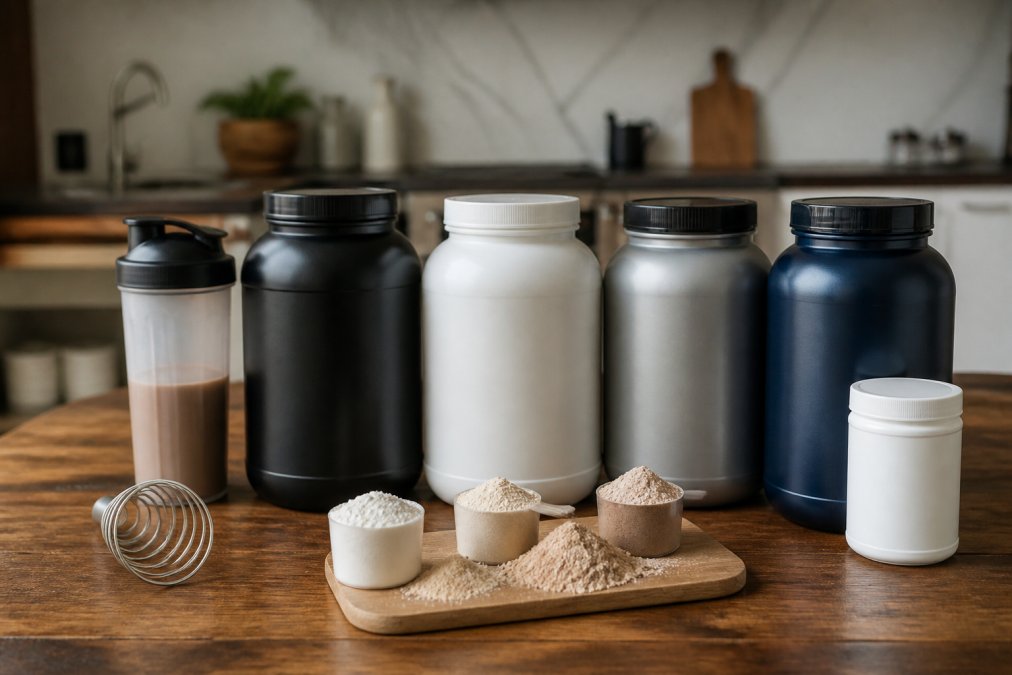
The five brands below represent the clearest, most beginner-appropriate options across different goals, budgets, and dietary needs.
1. Optimum Nutrition Gold Standard 100% Whey, Best Overall for Beginners
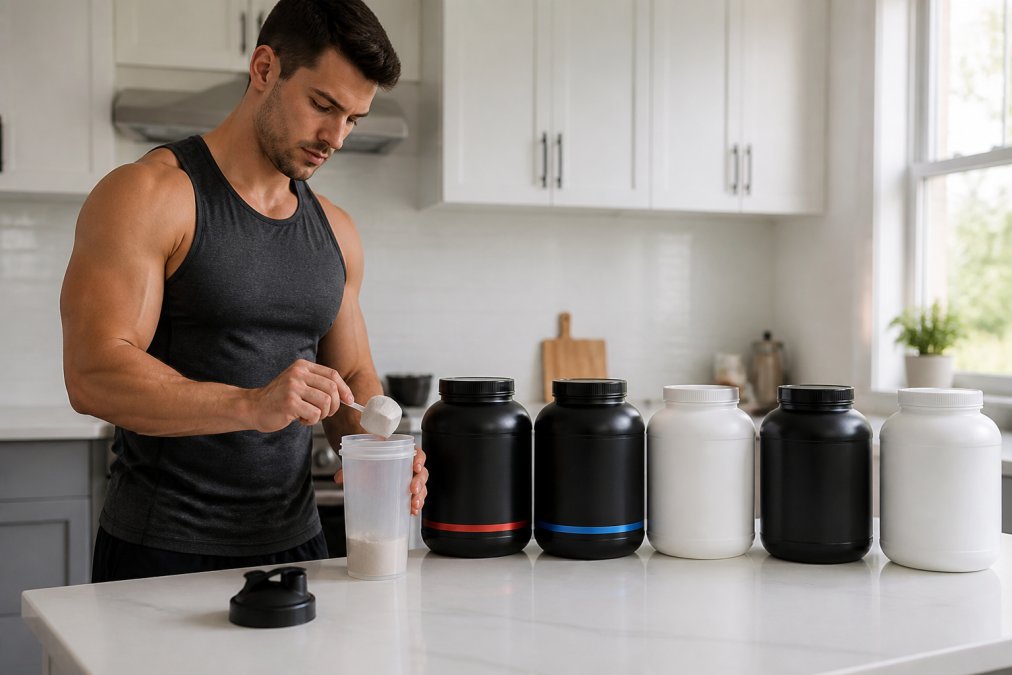
Optimum Nutrition Gold Standard is the safest first choice for most beginners. The formula combines whey protein isolate, concentrate, and hydrolyzed whey peptides, delivering 24g of protein and 5.5g of naturally occurring BCAAs per serving. Mixability is excellent, it dissolves with a spoon, and the flavor range is wide without being cloyingly sweet.
What works: Trusted brand with consistent quality, widely available, excellent protein per serving for the price, and easy on the stomach for most users.
What doesn't: Some flavors contain artificial sweeteners like sucralose. Not suitable for anyone with a dairy allergy.
Best for: Beginners who want reliable, widely available whey protein without overthinking the purchase.
2. Myprotein Impact Whey, Best Budget Pick
Myprotein delivers 22g of protein per serving at one of the lowest cost-per-gram ratios from a reputable brand. It carries Informed Choice certification, meaning it undergoes third-party testing for banned substances. Calories come in at 140 or below per serving, keeping macronutrient tracking straightforward.
The drawback: it ships in a zipper-sealed bag rather than a tub, and contains milk and soy processed in a facility handling eggs and gluten.
Best for: Budget-conscious beginners who want third-party tested whey protein at the lowest justifiable price point.
3. Transparent Labs 100% Grass-Fed Whey Isolate, Best Clean Label Option
Transparent Labs contains no artificial sweeteners, no food dyes, and no fillers, sweetened instead with stevia or monk fruit. At 28g of protein per serving and 88% protein by weight, the purity is genuinely high. The grass-fed sourcing and low lactose content make it reasonable for people with mild lactose sensitivity.
What works: Exceptional ingredient transparency, high protein purity, sucralose-free formula, and 19+ flavor options.
What doesn't: Premium price per serving is real. This prioritizes ingredients over cost.
Best for: Health-conscious beginners who want to avoid artificial sweeteners and prioritize nutritional transparency.
4. Garden of Life Sport Organic Plant-Based Protein, Best for Dairy-Free Beginners
Garden of Life Sport delivers 30g of organic plant-based protein per serving with 5.5g of BCAAs and 5g of glutamine. Certifications include USDA Organic, Non-GMO Project Verified, Gluten-Free, and Vegan. The texture is smooth and creamy for a plant protein, avoiding the grittiness that plagues competitors.
The tradeoff is price, it costs more per serving than whey options, and flavor variety is limited.
Best for: Vegan beginners, those with dairy allergies, or anyone wanting an organic plant-based protein with a complete amino acid profile.
5. Dymatize ISO100 Hydrolyzed, Best for Sensitive Stomachs
Hydrolyzed whey protein is pre-digested into smaller peptide chains, speeding absorption and dramatically reducing gastrointestinal distress. Each serving delivers 25g of protein, 5.5g of BCAAs, and 2.7g of leucine. Fat and sugar content come in at under 1g each.
What works: Fast absorption, easy digestion, high leucine content, and clean macronutrient profile make this ideal for post-workout recovery without digestive side effects.
What doesn't: It costs more than standard whey concentrate, and some flavors contain artificial ingredients.
Best for: Beginners with sensitive stomachs, lactose intolerance, or anyone who's experienced digestive discomfort from standard whey protein concentrate.
Whey vs Plant Protein for Muscle Gain: What Beginners Need to Know
Whey protein supports muscle hypertrophy more efficiently than most plant proteins gram-for-gram, primarily because of its superior amino acid profile and higher leucine content. Leucine is the amino acid most directly responsible for triggering muscle protein synthesis.
Plant-based protein absolutely supports muscle growth. Blended plant proteins overcome incomplete amino acid profiles by combining multiple sources. Bioavailability differs, whey absorbs quickly while plant proteins digest more slowly, which can benefit satiety.
According to National Institutes of Health Office of Dietary Supplements, animal-based proteins like whey consistently score higher on the Digestible Indispensable Amino Acid Score than single-source plant proteins.
For most beginners: if you tolerate dairy, whey isolate or concentrate gives you the most efficient path to muscle protein synthesis. If you're dairy-free, a blended plant protein with complete amino acid coverage is a fully viable alternative.
How to Choose Protein Powder for Beginners: A Simple Framework
Choosing the right protein powder comes down to four questions asked in order:
- Do you have any dietary restrictions? Dairy allergy, lactose intolerance, vegan diet, or gluten sensitivity eliminates certain categories immediately.
- What's your primary goal? Muscle gain favors high leucine content and fast absorption. Weight management favors higher satiety.
- What's your budget per month? This determines whether you're shopping whey concentrate, isolate, or plant-based options.
- Do you have a history of digestive issues with protein powder? If yes, start with hydrolyzed whey or a plant-based blend.
| Goal | Recommended Type | Key Feature to Check |
|---|---|---|
| Muscle building | Whey Isolate or Hydrolyzed | Leucine content, protein per serving |
| Weight management | Whey Concentrate or Plant Blend | Satiety, fiber content |
| Dairy-free / vegan | Plant-Based Blend | Complete amino acid profile |
| Sensitive stomach | Hydrolyzed Whey | Hydrolyzed label, low lactose |
| Clean ingredients | Grass-Fed Whey Isolate | No artificial sweeteners, third-party tested |
Ingredients to Avoid as a Beginner
Watch for proprietary blends without disclosure, excessive artificial sweeteners (sucralose and acesulfame potassium), heavy fillers like maltodextrin, and products without third-party testing. Informed Choice, NSF Certified for Sport, and similar certifications verify label claims and heavy metal testing.
Allergy-Specific Guidance: Finding the Right Fit
- Dairy allergy (not lactose intolerance): Avoid all whey and casein products. Choose plant-based options certified dairy-free, like Garden of Life Sport.
- Lactose intolerance: Whey isolate and hydrolyzed whey are processed to remove most lactose. Dymatize ISO100 and Transparent Labs Whey Isolate are good starting points.
- Gluten sensitivity or celiac disease: Check individual flavor certifications. Myprotein and some Transparent Labs flavors carry gluten-free certification, but not universally across all flavors.
- Soy allergy: Many plant-based proteins use soy as a primary source. Garden of Life Sport is soy-free. Myprotein Impact Whey is processed in a facility that handles soy.
Protein Powder Dosage for Beginners: How Much Do You Actually Need?
Protein powder dosage should be determined by total daily protein intake first, with powder filling the gap between food sources and your target. Most guidance for active adults points to 0.7 to 1 gram of protein per pound of bodyweight per day, though individual needs vary.
The Academy of Nutrition and Dietetics position on protein recommends that active individuals assess total dietary protein before adding supplementation, since whole food sources should form the foundation of daily protein intake.
A common beginner mistake is treating protein powder as a meal replacement. One or two servings per day is typical for most beginners.
When to Take Protein Powder for Best Results
Post-workout recovery is the most evidence-backed timing for protein supplementation. Consuming protein within a couple of hours after training supports muscle protein synthesis when your muscles are most receptive.
Total daily protein intake matters more than precise timing for most beginners. If hitting your daily protein target means drinking a shake at noon rather than immediately post-workout, that's fine. Consistency beats optimization at the beginner stage.
Budget-Friendly Beginner Hacks to Make Your Tub Last Longer
- Use half-scoops strategically: If a meal already contains 20g of protein, a half-scoop brings you to target without burning through a full serving.
- Buy larger sizes: The cost per serving drops significantly in 5lb tubs versus 1lb options.
- Prioritize post-workout timing: Use powder on training days, and rely on whole food sources on rest days.
- Mix with water, not milk: Milk adds protein and calories, but doubles the effective cost per serving on a tight budget.
- Watch for sales cycles: Major supplement brands run predictable discount windows. Stocking up during sales cuts annual costs meaningfully.
Beating Flavor Fatigue: Mixability Tips and Protein Powder Baking Ideas
Flavor fatigue is one of the most common reasons beginners quit protein supplementation. The fix isn't buying a new flavor every week, it's changing how you use the powder you have.
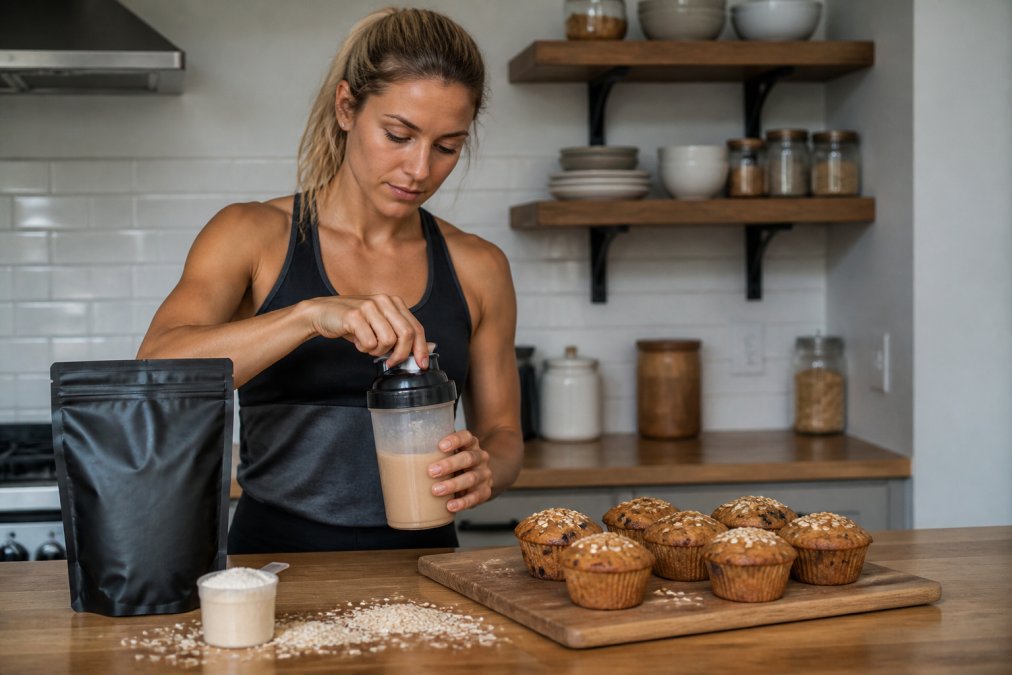
Mixability tips that actually help:
- Add liquid first, then powder, to prevent clumping
- Use cold water or milk; warm liquids cause most whey proteins to clump
- A blender bottle with a wire whisk ball outperforms standard shakers
- Blend with frozen banana and ice for a smoothie texture
Protein powder baking ideas extend how long you'll stick with a product:
- Protein pancakes: Replace one-third of flour with unflavored or vanilla protein powder for 15-20g of protein per batch.
- Protein muffins: Chocolate protein powder works well in banana muffin recipes.
- Overnight oats: Stir one scoop into oats with milk before refrigerating overnight.
- Protein energy balls: Mix protein powder with oats, peanut butter, and honey. No baking required.
Variety in how you consume your protein keeps supplementation sustainable long-term. That consistency is what actually drives results.
Starting a supplement routine is straightforward when you know what to look for. Body Fuel Fury's online store carries a curated selection of performance supplements chosen for quality, third-party testing credentials, and value, with a user-friendly shopping experience and customer service team ready to help you find the right fit. Browse our supplement range and find the protein powder that matches your goals, budget, and dietary needs today.
Frequently Asked Questions
Q: Do beginners really need protein powder to see results?
A: Protein powder is a supplement, not a requirement. Whole food sources like chicken, eggs, Greek yogurt, and legumes can meet your daily protein intake. That said, many beginners find it difficult to hit their targets through food alone, especially on busy days. Protein powder offers a convenient, fast option for post-workout recovery. If your diet already covers your protein needs, you may not need it. If it falls short consistently, a quality powder can genuinely help support muscle protein synthesis.
Q: What is the difference between whey isolate and whey concentrate for beginners?
A: Whey protein isolate is processed further to remove most of the fat and lactose, leaving a product that is typically 90% or more protein by weight with high bioavailability. Whey protein concentrate retains more fat and carbohydrates and generally costs less per serving. For beginners with mild lactose sensitivity or those tracking macros tightly, isolate is the cleaner choice. If budget is the priority and digestion is not an issue, concentrate delivers solid results at a lower price point.
Q: Are there plant-based protein powders recommended for beginners?
A: Yes. Options like Garden of Life Sport Organic Plant-Based Protein and Orgain Organic Protein Powder work well for beginners avoiding dairy or following a vegan diet. The key is checking that the product provides a complete amino acid profile, which blended plant proteins (such as pea combined with rice) typically achieve. Look for products with at least 20g of protein per serving, third-party testing for heavy metals, and a clean label without unnecessary fillers or artificial sweeteners.
Q: How do I know a protein powder is safe and free from banned substances?
A: Look for products that carry third-party testing certifications such as Informed Choice, NSF Certified for Sport, or Banned Substances Control Group (BSCG). These programs test for heavy metals, contaminants, and banned substances independently of the manufacturer. Myprotein Impact Whey carries Informed Choice certification, for example. Always check the label for nutritional transparency and avoid products that list proprietary blends without disclosing individual ingredient amounts.
Q: How much protein powder should a beginner take per day?
A: Most beginners benefit from 0.7 to 1 gram of protein per pound of bodyweight daily, combining food and supplements. A single serving of protein powder, typically 20 to 30 grams of protein, is enough for most people post-workout. Starting with one scoop per day and assessing digestion before increasing is a practical approach. Taking more than two servings daily rarely adds benefit for beginners and can cause gastrointestinal distress, especially with concentrate-based products.