
 ultimate-guide
Is Creatine Safe for Women Over 40?
Table of Contents
- What Creatine Monohydrate Actually Does in the Body
- Creatine Benefits for Women Over 40: Muscle, Bone, and Brain
- Is Creatine Safe for Women Over 40? Safety Profile and Side Effects
- Does Creatine Cause Bloating in Women? Water Retention Explained
- Creatine Dosage for Women: Protocols That Actually Work
- Creatine and Menopause: HRT Interactions and Perimenopause Timing
- Choosing the Right Form: Creatine Monohydrate vs. Other Types
- Frequently Asked Questions
Last Updated: August 26, 2026
What Creatine Monohydrate Actually Does in the Body
Is creatine safe for women over 40? Yes, creatine monohydrate is safe for healthy women over 40, and the evidence is among the strongest in sports nutrition.
Creatine monohydrate is a naturally occurring compound found in muscle tissue and the brain that your body synthesizes from amino acids and absorbs from dietary sources like red meat and fish. Food sources rarely supply enough to optimize intracellular stores, which is where supplementation becomes relevant.
When you take creatine, your muscles store it as phosphocreatine, which acts as a rapid reservoir for ATP production during high-intensity effort. ATP is the currency your cells use for energy, and phosphocreatine replenishes it faster than any other metabolic pathway. The practical result: more reps, shorter recovery between sets, and less neuromuscular fatigue.
For women over 40, this matters beyond gym performance. Declining estrogen levels during perimenopause and post-menopausal years directly reduce the body's natural creatine synthesis, widening the gap between what your body makes and what your muscles and brain need. Creatine monohydrate has the best bioavailability and most extensive safety data of any creatine form on the market.
Creatine Benefits for Women Over 40: Muscle, Bone, and Brain
Most people think creatine is a bodybuilder supplement. The evidence for creatine benefits for women over 40 extends well beyond aesthetics into areas that directly affect long-term health and quality of life.

Muscle Mass and Sarcopenia Prevention
Sarcopenia, the age-related loss of lean muscle mass, typically accelerates after 40 in women due to declining estrogen, which affects muscle protein synthesis and recovery. Without intervention, this compounds into reduced strength, slower metabolism, and increased fall risk.
Creatine supplementation, combined with resistance training, supports lean muscle mass retention by improving the quality and volume of work muscles can perform. More training stimulus means a stronger signal for muscle protein synthesis. Research reviewed by the National Institutes of Health's PubMed database consistently shows that creatine augments strength training outcomes in older adults, with women showing meaningful responses even at lower doses than those typically studied in men. Creatine does not build muscle on its own, it makes your training more productive, and that is what drives the adaptation.
Bone Mineral Density and Post-Menopausal Health
Bone mineral density declines significantly after menopause, raising osteoporosis risk. Creatine shows promise here through its role in energy metabolism within osteoblasts, the cells responsible for bone formation. Clinical trials examining creatine supplementation alongside resistance training show cautiously encouraging findings: while creatine alone is not a bone-density treatment, its combination with weight-bearing exercise appears to support skeletal health more effectively than exercise alone.
Cognitive Function and Neuroprotection
The brain is one of the most energy-demanding organs and maintains its own creatine stores to buffer ATP during high cognitive demand. As women age, cognitive fatigue, brain fog, and mood changes become more common, particularly during perimenopause and post-menopausal years. Evidence reviewed by the International Society of Sports Nutrition suggests that creatine supplementation supports cognitive function, particularly in tasks requiring working memory and mental processing speed. Creatine also appears to reduce markers of oxidative stress in neural tissue, which is relevant for healthy aging.
Is Creatine Safe for Women Over 40? Safety Profile and Side Effects
Is creatine safe for women over 40? Yes, with a well-established safety profile across decades of clinical research.
The most common worry is kidney function. Creatine supplementation raises serum creatinine levels, a standard marker used to assess kidney function. However, elevated creatinine from creatine supplementation is not kidney damage, it reflects increased creatine turnover in muscle tissue. For women with healthy kidneys, creatine supplementation at recommended doses does not impair kidney function. Liver function is similarly unaffected, blood pressure does not rise, and there is no credible evidence linking creatine to hormonal disruption in women.
The FDA classifies creatine as a dietary supplement under the Dietary Supplement Health and Education Act. Manufacturers are responsible for safety, which is why sourcing from reputable suppliers matters. Look for products carrying third-party testing certifications such as NSF Certified for Sport or Informed Sport, which verify that what is on the label is in the product.
Does Creatine Cause Bloating in Women? Water Retention Explained
Does creatine cause bloating in women? The honest answer is: it depends on the protocol, and the concern is frequently overstated.
Creatine draws water into muscle cells through intracellular hydration. This is not the same as subcutaneous water retention, which causes the puffy appearance people associate with bloating. The water goes inside the muscle, making muscles look fuller and more defined. The bloating concern is most associated with the loading phase, where large doses can cause gastrointestinal discomfort in some individuals. Women who skip loading and start at maintenance dose typically report no bloating.
Key distinctions:
- Intracellular hydration (what creatine causes): water stored inside muscle fibers, supports performance, improves muscle appearance
- Subcutaneous water retention (what bloating looks like): water under the skin, associated with high sodium intake, hormonal fluctuation, or medications
- Gastrointestinal discomfort (what some experience with loading): temporary, dose-dependent, largely avoidable
If sensitive to digestive discomfort, take creatine with food, avoid the loading phase, and split your dose if needed. Most women who attribute bloating to creatine are experiencing normal intracellular hydration effects, which resolve within two to three weeks.
Creatine Dosage for Women: Protocols That Actually Work
Standard dosage guidance was developed largely from studies on young men. Women over 40 do not need to follow those protocols exactly, and a modified approach often produces better results with fewer side effects.
Loading Phase vs. Maintenance Dose
The loading phase involves taking a higher dose for five to seven days to saturate muscle creatine stores rapidly, followed by a lower maintenance dose. This works, but is not mandatory.
| Protocol | Daily Amount | Duration to Saturation | GI Comfort | Best For |
|---|---|---|---|---|
| Loading Phase | Higher initial dose | 5-7 days | Lower (higher GI risk) | Faster performance gains |
| Maintenance Only | Standard daily dose | 3-4 weeks | Higher (minimal GI impact) | Women sensitive to bloating |
| Split Maintenance | Divided across 2 servings | 3-4 weeks | Highest | Sensitive digestive systems |
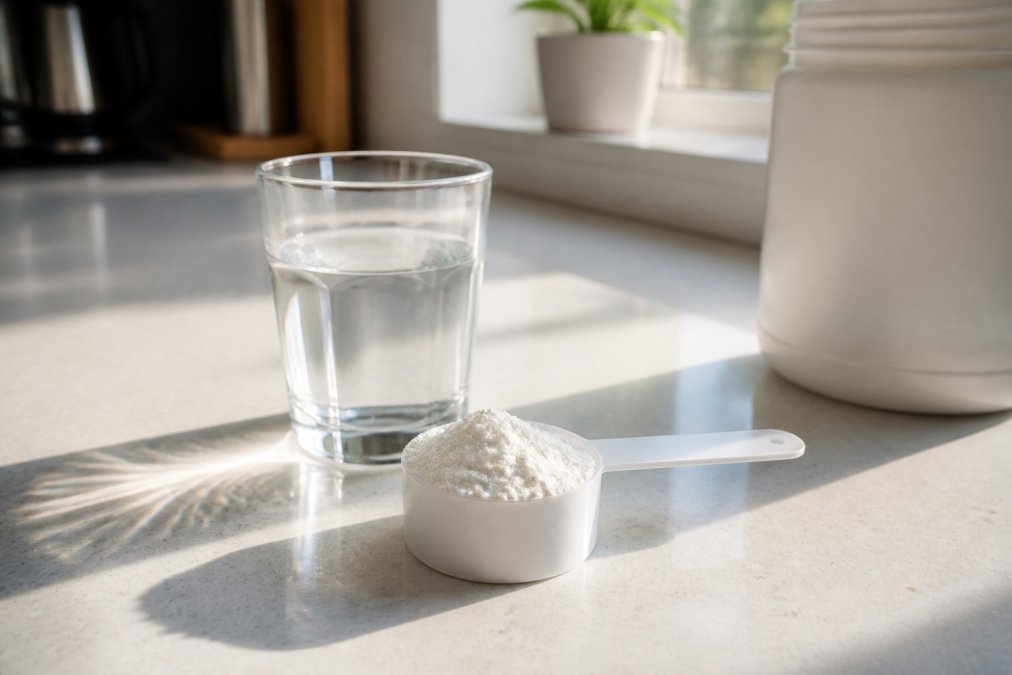
According to position statements from the International Society of Sports Nutrition, a standard daily maintenance dose of 3-5 grams of creatine monohydrate is effective for most adults and reaches full muscle saturation within three to four weeks without gastrointestinal issues. For women over 40, this is generally the recommended starting point.
Creatine Cycling Protocols for Women Over 40
Cycling creatine, taking it for a defined period then stopping before restarting, is a strategy some women prefer. Creatine stores return to baseline within four to six weeks of stopping, so cycling does not offer a physiological advantage for most healthy women. However, cycling can align supplementation with training phases: taking creatine during high-intensity blocks and pausing during deload weeks.
A common cycling protocol: eight to twelve weeks on, two to four weeks off. Many women report no meaningful performance difference during off cycles when training volume is also reduced, suggesting the benefit is closely tied to training demand.
Creatine and Menopause: HRT Interactions and Perimenopause Timing
The relationship between creatine supplementation and menopause is nuanced in ways that matter clinically. During perimenopause, estrogen levels fluctuate unpredictably before declining. Estrogen plays a role in creatine synthesis and transport, so as estrogen drops, the body's ability to maintain optimal creatine stores diminishes. This is one reason why cognitive function and physical performance often decline simultaneously during this period.
Starting creatine supplementation during perimenopause, rather than waiting until post-menopausal years, may offer a meaningful advantage by supporting energy metabolism during the transition rather than attempting to reverse deficits afterward.
On HRT interactions: Current evidence does not indicate any adverse interaction between creatine monohydrate and standard HRT medications, including estrogen and progesterone formulations. Creatine is not metabolized by the same pathways as hormonal medications and does not appear to affect their efficacy. Any woman on HRT or other prescription medications should discuss supplementation with her prescribing physician. The FDA's guidance on dietary supplement safety, available through the FDA's dietary supplements information page, outlines the general framework consumers should use when evaluating supplement safety alongside medications.
Choosing the Right Form: Creatine Monohydrate vs. Other Types
The supplement market offers various creatine forms: creatine ethyl ester, buffered creatine, creatine hydrochloride, creatine nitrate, and others. Each is marketed with claims of superior absorption or reduced bloating. The reality is more straightforward.
Creatine monohydrate has the most extensive research base, the best-documented safety profile, and the highest bioavailability of any form tested in clinical trials. It is also the most affordable. Every other form has been developed primarily as a marketing differentiator, and none has consistently demonstrated superiority over monohydrate in head-to-head comparisons.
For women over 40 new to creatine supplementation, the recommendation is direct: start with creatine monohydrate. It is the evidence-based choice. If you experience genuine digestive sensitivity, creatine hydrochloride is a reasonable alternative, but do not pay a significant premium expecting meaningfully different results.
What matters is quality. Look for creatine monohydrate that is third-party tested, ideally carrying NSF Certified for Sport or Informed Sport certification. These certifications verify purity and confirm the absence of banned substances. As noted by NSF International's sport certification program, certified products undergo batch testing that standard supplements do not.
At Body Fuel Fury, sourcing supplements that meet rigorous quality standards is a core part of what we do. The creatine monohydrate available through our store is selected with this standard in mind, backed by years of industry experience in identifying products that deliver on their label claims.
Frequently Asked Questions
Are there any negative effects of creatine for women?
Creatine monohydrate has a well-established safety profile backed by decades of clinical trials. The most commonly reported effects are temporary water retention and, in some cases, mild gastrointestinal discomfort when taking large doses at once. These issues are largely avoidable by skipping the loading phase and spreading intake across the day. Kidney function concerns are frequently cited, but current evidence does not support this risk in healthy individuals without pre-existing kidney conditions.
What is the recommended daily dosage of creatine for women?
Most research supports a maintenance dose of 3 to 5 grams of creatine monohydrate per day for women. A loading phase of 20 grams per day split into four doses over five to seven days can saturate muscle stores faster, but it is entirely optional and increases the likelihood of water retention and bloating. Women over 40 who are sensitive to GI discomfort often do better starting directly at the 3-gram maintenance dose and increasing gradually.
Does creatine interact with hormone replacement therapy?
No well-documented clinical interactions exist between creatine monohydrate supplementation and standard hormone replacement therapy medications. Both work through separate physiological pathways: creatine supports ATP production and intracellular hydration, while HRT addresses estrogen and progesterone levels. That said, women on HRT or other prescription medications should confirm with their prescribing physician before adding any new dietary supplement to their routine, particularly if they have kidney or cardiovascular conditions.
Why do some women experience weight gain when starting creatine?
The initial weight increase from creatine is almost entirely water, not fat. Creatine draws water into muscle cells through a process called intracellular hydration, which can add one to three pounds on the scale within the first week or two. This is a normal physiological response and is distinct from fat gain. Over time, consistent creatine use combined with strength training leads to genuine lean muscle mass gains, which will also register as added weight but represent improved body composition.
Choosing a creatine supplement should not be complicated, but finding one you can actually trust requires knowing what to look for. Body Fuel Fury offers creatine monohydrate sourced for quality and purity, with a fast, user-friendly shopping experience and customer service that stands behind every order. If you are ready to add a well-researched, evidence-backed supplement to your training and healthy aging routine, shop now at Body Fuel Fury and start with confidence.