 ultimate-guide
Is Pre-Workout on an Empty Stomach Worth It?
Table of Contents
- The Real Question: Fasted Training vs. Fueled Performance
- What Happens When You Take Pre-Workout on an Empty Stomach?
- Pre-Workout Side Effects on Empty Stomach: What to Watch For
- How Long Before Workout Should I Eat for Best Results?
- Who Should Avoid Empty Stomach Pre-Workout?
- Best Supplements for Muscle Growth 2026: Timing and Stacking
- The Verdict: Making the Right Choice for Your Workout
- Frequently Asked Questions
Last Updated: September 5, 2026
The Real Question: Fasted Training vs. Fueled Performance
The debate over whether pre-workout on an empty stomach is worth it usually misses the point. The real issue is whether you are training fasted for a specific metabolic reason or simply skipping a meal out of convenience.
Most gym-goers fall into one of two camps: those chasing the purported benefits of fasted cardio and those who feel weak without fuel. The answer depends on your training goal, your stimulant tolerance, and what you ate the day before.
A common mistake is treating pre-workout like coffee you can sip anytime. If you haven't eaten in eight hours, that mix hits your bloodstream differently than after a balanced meal.
What Happens When You Take Pre-Workout on an Empty Stomach?
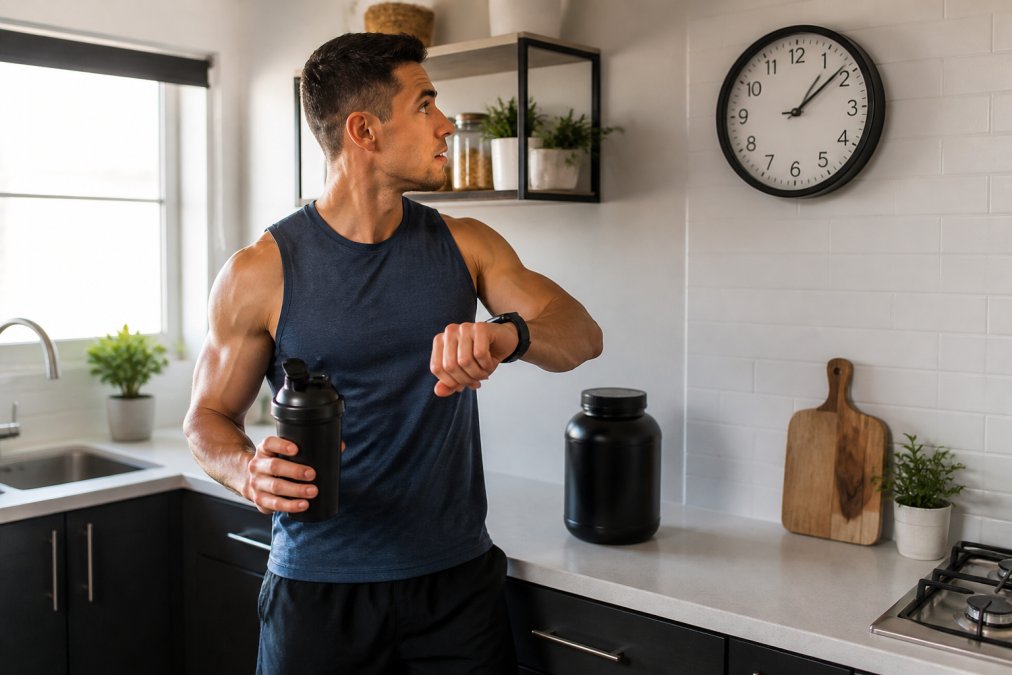
Your body processes the formula differently, and not just by feeling a bigger kick. When you haven't eaten for 8 to 12 hours, liver glycogen is largely depleted and blood glucose drifts down to a fasting baseline of 70-90 mg/dL.
- Gastric emptying speeds up. With no food bolus in your stomach, the liquid supplement passes into your small intestine in roughly 10-15 minutes instead of 30-60. That means the full dose hits your bloodstream nearly all at once.
- Caffeine peaks faster. Caffeine's half-life is about 5 hours, but its peak plasma concentration typically occurs 30-60 minutes after ingestion (PubMed). Fasted, that peak arrives closer to the 30-minute mark, which is why the jitters or a racing heart can feel sudden.
- Your body shifts to fat oxidation, but only if it can. With low circulating glucose, your liver ramps up gluconeogenesis and your muscles rely more on free fatty acids. For someone adapted to low-carb or fasted training, this is smooth. For someone who ate a high-carb dinner and trains fasted for the first time, the metabolic switch is sluggish, and you feel it as weakness or lightheadedness.
- Cortisol and adrenaline rise. Caffeine amplifies the natural morning cortisol spike. That's a double-edged sword: it mobilizes energy, but it also raises heart rate and blood pressure more than the same dose would after a meal.
Stimulant-Heavy vs. Stimulant-Free Formulas
Most articles treat "pre-workout" as one thing. It isn't. The ingredient profile changes the fasted response dramatically:
- High-stimulant formulas (200 mg+ caffeine, plus yohimbine or higenamine) are the ones most likely to cause nausea, palpitations, and cold sweats when fasted. Yohimbine in particular is notorious for increasing anxiety and blood pressure in a fasted state because it blocks alpha-2 adrenergic receptors, which normally put a brake on norepinephrine release.
- Stimulant-free or low-stimulant formulas (100 mg caffeine or less, relying on citrulline, beta-alanine, and tyrosine) are far safer on an empty stomach. They don't trigger the same cortisol surge, and the primary risk shifts from cardiovascular stress to simple stomach discomfort from ingredients like beta-alanine or high doses of citrulline malate.
If you're determined to train fasted, check the label for total caffeine per scoop and hidden stimulants like theacrine or hordenine. A half-scoop of a high-stimulant product is often a better starting point than a full scoop of a "gentler" formula with 150 mg of caffeine.
The Blood Sugar Question
A common fear is that fasted pre-workout causes hypoglycemia. For healthy individuals without insulin resistance, fasting blood glucose is tightly regulated by glucagon and cortisol. The bigger risk is a rebound effect: if you take a high-carb pre-workout or sip a sugary intra-workout drink after starting fasted, insulin spikes and glucose can dip below baseline mid-session.
With a zero-calorie or low-calorie pre-workout, hypoglycemia is unlikely unless you have reactive hypoglycemia or impaired glucose tolerance. Lightheadedness is more often a drop in blood pressure from vasodilators combined with caffeine's diuretic effect and inadequate hydration.
The Adaptation Curve
Your body adapts to fasted training over 2 to 4 weeks. Initially, performance may drop 5-10% on compound lifts. After adaptation, most lifters report stable energy and improved focus. But adaptation is not universal, some never feel good fasted, and forcing it provides no metabolic advantage for muscle growth.
Your first fasted session is not a reliable test. You need at least three sessions, spaced across different days, to separate genuine intolerance from a lack of adaptation.
Pre-Workout Side Effects on Empty Stomach: What to Watch For
The most common pre-workout side effects on an empty stomach include nausea, jitters, and a sudden energy drop. These occur because high-dose stimulants like caffeine constrict blood vessels while your system lacks the glucose needed to sustain output.
Watch for these warning signs during your first few fasted sessions:
- Dizziness or lightheadedness during compound lifts
- Cold sweats or clammy skin within 20 minutes of dosing
- A rapid heart rate that feels disproportionate to your effort
- Stomach cramping that forces you to cut your session short
- An energy crash around the 30-minute mark of training
The distinction between mild discomfort and a dangerous reaction often comes down to stimulant sensitivity. High doses of caffeine anhydrous are more likely to cause vasoconstriction and anxiety when fasted.
How Long Before Workout Should I Eat for Best Results?
How long before a workout you should eat depends on meal size and composition. A full meal requires three to four hours for digestion; a small snack needs only 30 to 60 minutes. Pre-workout supplements work best taken 20 to 30 minutes before training.
| Scenario | Timing | Best Approach |
|---|---|---|
| Full meal (protein + carbs) | 3-4 hours before | Skip pre-workout or halve the dose |
| Light snack (fruit or toast) | 45-60 minutes before | Full pre-workout dose is safe |
| True fasted state (8+ hours) | Take pre-workout now | Start with half dose to test tolerance |
| Early morning wake-up | 15-20 minutes before | Consider food first, then supplement |
A practical middle ground is a small carbohydrate source like a banana alongside your pre-workout. This provides glucose without the heaviness of a full meal, preserving the energy spike while reducing the risk of hypoglycemia.
Who Should Avoid Empty Stomach Pre-Workout?
Most articles give a one-line warning about "medical conditions" and move on. That's not good enough, because the risk profile changes with your health status and the specific ingredients in your pre-workout.
Insulin Sensitivity and Blood Sugar Regulation
If you have type 2 diabetes, prediabetes, or reactive hypoglycemia, taking a stimulant pre-workout on an empty stomach is a gamble. Caffeine increases insulin resistance acutely, a single 200 mg dose can reduce insulin sensitivity by up to 15% for several hours.
More dangerous is combining a fasted state with a pre-workout containing sugar or maltodextrin. Rapid absorption triggers a sharp insulin spike, followed by a glucose dip 60-90 minutes later, right in the middle of your workout. If you're on metformin or insulin, this can push you into symptomatic hypoglycemia.
What to do instead: If you have any blood sugar condition, eat a small meal with protein and fat (e.g., Greek yogurt or eggs) 60-90 minutes before training, and use a stimulant-free pre-workout or skip it. Test your glucose before and after a session to understand your response.
GERD and Acid Reflux
Fasted stimulants are a known trigger for gastroesophageal reflux. Caffeine relaxes the lower esophageal sphincter, and an empty stomach means no buffer when gastric acid pools. The result is a burning throat sensation that can last for hours.
If you have GERD or take a proton pump inhibitor (like omeprazole), the risk is higher than you might think. Caffeine combined with acidic citrulline malate on an empty stomach is particularly problematic.
What to do instead: Take your pre-workout with at least 8 ounces of water and a small handful of crackers or a banana. If symptoms persist, switch to a non-acidic, stimulant-free formula or train fueled.
Anxiety and Panic Disorders
Caffeine is an anxiogenic, it activates the same neural pathways as the fight-or-flight response. In a fasted state, the cortisol spike is more pronounced. For someone with generalized anxiety disorder or panic attacks, a full dose of a high-stimulant pre-workout on an empty stomach can trigger a panic episode mid-set.
Most practitioners find that individuals with anxiety disorders tolerate no more than 100 mg of caffeine fasted, and many do better with zero. Yohimbine and higenamine are absolute contraindications for this group.
What to do instead: Choose a stimulant-free pre-workout with citrulline and beta-alanine. If you need caffeine for alertness, take 50-100 mg (about half a cup of coffee) with food, not as part of a pre-workout cocktail.
Cardiovascular Conditions and Blood Pressure Medication
Caffeine constricts blood vessels and increases heart rate. In a fasted state, this effect is amplified because there's no food to slow absorption. For someone with hypertension, arrhythmia, or on beta-blockers or calcium channel blockers, the interaction is unpredictable.
If you take any cardiovascular medication, the safe approach is to avoid stimulant pre-workouts entirely. The National Institutes of Health guidance on caffeine safety notes that caffeine interacts with multiple drug classes, and the fasted state increases peak plasma concentration.
The Overlooked Group: Women in the Luteal Phase
One rarely mentioned group is women in the luteal phase of their menstrual cycle (the two weeks before menstruation). Elevated progesterone increases core body temperature and heart rate, and caffeine metabolism slows, meaning the same dose produces a stronger effect.
Many women report that a dose they tolerate well in the follicular phase causes jitters, nausea, or anxiety when taken fasted during the luteal phase. This is a documented interaction between caffeine and sex hormones.
What to do instead: Track your cycle alongside your training. If fasted pre-workout feels worse in the second half of your cycle, reduce the dose by half or switch to a stimulant-free formula during those two weeks.
A Practical Screening Checklist
Before you decide whether fasted pre-workout is safe for you, ask yourself:
- Have I ever been diagnosed with hypoglycemia, diabetes, or insulin resistance?
- Do I experience heartburn or acid reflux more than once a week?
- Have I been diagnosed with an anxiety disorder or panic attacks?
- Do I take any medication for blood pressure, heart rhythm, or acid reflux?
- Do I feel unusually sensitive to coffee (jitters from one cup)?
If you answered yes to any, eat something small before training and use a lower-stimulant or stimulant-free formula. If you answered no to all, start with a half dose and monitor how you feel across three sessions.
Best Supplements for Muscle Growth 2026: Timing and Stacking
The best supplements for muscle growth 2026 focus on proven ingredients rather than exotic blends. Creatine monohydrate, whey protein, and citrulline malate remain the foundation. Timing matters less than consistency.
For fasted training specifically:
- Take creatine at any time of day; it does not require food for absorption
- Consume whey protein within two hours post-workout to support muscle protein synthesis
- Use beta-alanine daily rather than only on training days to maintain muscle carnosine levels
- Add electrolytes to your water when training fasted to support hydration
Body Fuel Fury offers a curated selection of supplements designed for athletes. A user-friendly online shopping experience makes it simple to stock up on essentials like creatine and protein without navigating complex retail sites.
The Verdict: Making the Right Choice for Your Workout
So, is pre-workout on an empty stomach worth it? For experienced lifters who understand their tolerance and train with moderate intensity, the answer can be yes. For beginners, those with medical conditions, or anyone prone to jitters, the risks outweigh the benefits.
A practical compromise is to start with a half dose and a small snack, letting you gauge your response without committing to a fully fasted state.
The American Council on Exercise resource on pre-exercise nutrition reinforces that individual experimentation is the only reliable way to determine optimal fueling. No single protocol works for everyone, and your needs will shift as your fitness level improves.
If you're working out at home with equipment from Body Fuel Fury, you can control your environment and timing precisely, adjusting your approach session by session without the pressure of a crowded gym.
Frequently Asked Questions
Should I take pre-workout on a full or empty stomach?
It depends on your tolerance and goals. Taking pre-workout on an empty stomach can speed up absorption, which may lead to faster effects and support fat oxidation. However, if you are sensitive to stimulants or prone to hypoglycemia, taking it with a small meal is safer. For most people, a light snack 30-60 minutes before is a balanced approach. Listen to your body and start with a half dose to gauge your reaction.
Can fasted training lead to muscle breakdown?
Yes, it is possible. When you train fasted, your glycogen stores are lower, which can push your body into a catabolic state. This means it may break down muscle protein for energy. To minimize this risk, consider taking a dose of branched-chain amino acids (BCAAs) or a small protein shake before your workout. This helps preserve muscle mass while still allowing you to train in a fasted state.
How long should I wait after eating to take pre-workout?
Waiting 30 to 60 minutes after a small meal is generally sufficient. This allows for initial digestion and helps prevent gastric distress during your session. If you have eaten a large meal, wait 2 to 3 hours. The goal is to avoid training on a full stomach, which can divert blood flow to digestion and away from your muscles. This timing helps ensure proper nutrient absorption and reduces the risk of cramps.
Is it safe to take high-stimulant pre-workout on an empty stomach?
For most healthy adults, it is safe but can be intense. High-stimulant formulas taken without food can spike blood glucose levels and cause jitters, nausea, or lightheadedness. If you have a medical condition like heart issues or are sensitive to caffeine, it is not recommended. Start with half a serving to assess your tolerance. Always consult a doctor if you have concerns about stimulant sensitivity or other medical contraindications.
Choosing whether to take pre-workout fasted is a personal decision shaped by your health status, training goals, and daily schedule. Start conservative, track your energy levels, and adjust gradually. For quality supplements that support your goals, explore the selection at Body Fuel Fury and build a routine that works for your body. Get started with Body Fuel Fury and train with confidence.
Frequently Asked Questions
Q: Should I take pre-workout on a full or empty stomach?
A: It depends on your tolerance and goals. Taking pre-workout on an empty stomach can speed up absorption, which may lead to faster effects and support fat oxidation. However, if you are sensitive to stimulants or prone to hypoglycemia, taking it with a small meal is safer. For most people, a light snack 30-60 minutes before is a balanced approach. Listen to your body and start with a half dose to gauge your reaction.
Q: Can fasted training lead to muscle breakdown?
A: Yes, it is possible. When you train fasted, your glycogen stores are lower, which can push your body into a catabolic state. This means it may break down muscle protein for energy. To minimize this risk, consider taking a dose of branched-chain amino acids (BCAAs) or a small protein shake before your workout. This helps preserve muscle mass while still allowing you to train in a fasted state.
Q: How long should I wait after eating to take pre-workout?
A: Waiting 30 to 60 minutes after a small meal is generally sufficient. This allows for initial digestion and helps prevent gastric distress during your session. If you have eaten a large meal, wait 2 to 3 hours. The goal is to avoid training on a full stomach, which can divert blood flow to digestion and away from your muscles. This timing helps ensure proper nutrient absorption and reduces the risk of cramps.
Q: Is it safe to take high-stimulant pre-workout on an empty stomach?
A: For most healthy adults, it is safe but can be intense. High-stimulant formulas taken without food can spike blood glucose levels and cause jitters, nausea, or lightheadedness. If you have a medical condition like heart issues or are sensitive to caffeine, it is not recommended. Start with half a serving to assess your tolerance. Always consult a doctor if you have concerns about stimulant sensitivity or other medical contraindications.