 listicle
Portable Cold Plunge Tub Costs 2026: Complete Buyer's Guide
Table of Contents
- Portable Cold Plunge Tub Pricing Breakdown
- Affordable Cold Plunge Tubs Under $500
- Inflatable vs. Hard-Shell Cold Plunge: Cost and Performance
- Premium and High-End Cold Plunge Systems
- Cold Plunge Tub Maintenance Costs and Hidden Expenses
- Total Cost of Ownership: What You'll Actually Spend
- Choosing the Right Cold Plunge for Your Recovery Goals
- Frequently Asked Questions
Last Updated: September 24, 2026
Portable Cold Plunge Tub Pricing Breakdown
Portable cold plunge tub costs range from under $100 for entry-level inflatables to $5,000+ for premium systems. Understanding the factors that influence pricing can help you make an informed decision.
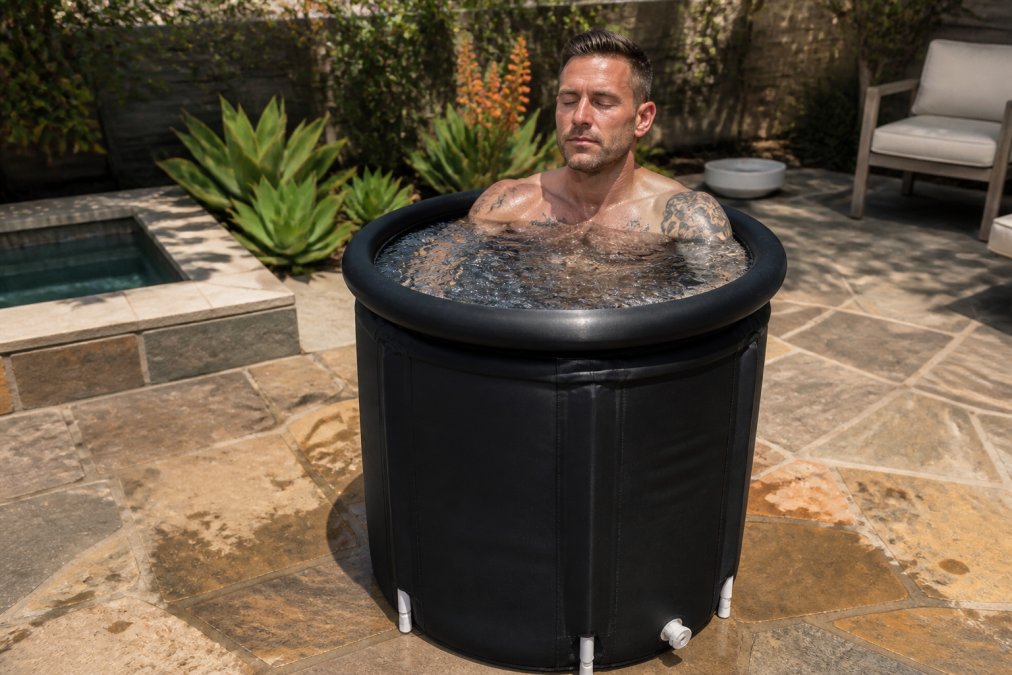
Total cost of ownership includes chiller units, filtration, maintenance, and energy, not just the tub price. Understanding this breakdown prevents costly surprises.
Affordable Cold Plunge Tubs Under $500
Budget models prioritize accessibility, making them ideal for testing cold water immersion before committing to larger investments.
Entry-Level Inflatable Models ($50-$150)
You get a basic PVC tub and drain valve, but no temperature control or filtration. Most inflatable models last 1-2 seasons before seams fail.
Mid-Range Portable Systems ($300-$500)
Mid-range systems offer insulation, durability, and chiller compatibility, paying for multi-year lifespan and upgrade flexibility.
A well-insulated tub at 40°F stays usable for 30-40 minutes without ice; a basic inflatable drops to unusable temperatures in 15 minutes.
Inflatable vs. Hard-Shell Cold Plunge: Cost and Performance
The choice between inflatable and hard-sided tubs affects cost, durability, and the time portability demands.
Cost Comparison
Inflatable tubs ($50-$300) are lightweight but degrade within 18-24 months of consistent use.
Hard-shell tubs ($500+) use durable plastics or fiberglass and last multiple years, paying for themselves through durability if used year-round.
Over five years, replacing inflatables every two years costs $150-300 total; a hard-shell investment of $500-1,500 lasts the entire period.
The Hidden Cost of Portability: Setup and Teardown Time
Inflatable tub setup and teardown:
- Unpack and position the tub: 3-5 minutes
- Inflate using electric pump or manual valve: 8-12 minutes (electric pump faster; manual valves require sustained effort)
- Fill with water (using garden hose): 15-20 minutes for a 100-gallon capacity
- Add ice or activate chiller: 5-10 minutes
- Total setup time: 31-47 minutes
After use:
- Drain water (using drain valve or pump): 10-15 minutes
- Deflate using valve or electric pump: 5-8 minutes
- Dry and pack into storage bag: 5-10 minutes
- Total teardown time: 20-33 minutes
Hard-shell tub setup and teardown:
- Position tub (may require two people for larger models): 5-10 minutes
- Fill with water: 15-20 minutes
- Add ice or activate chiller: 5-10 minutes
- Total setup time: 25-40 minutes (comparable to inflatable, but no inflation step)
After use:
- Drain water: 10-15 minutes
- Wipe down and cover: 5-10 minutes
- Total teardown time: 15-25 minutes (faster because no deflation required)
Over 12 monthly uses, inflatable users invest 10-11 hours in setup/teardown; hard-shell users invest 8-9 hours. Annually, this is 120-132 hours versus 96-108 hours.
Temperature Retention and Performance Consistency
Temperature retention differs meaningfully between the two types. Hard-shell insulation keeps water cold 2-3 times longer than inflatable alternatives. This reduces ice consumption and energy costs if you're using a chiller unit. According to research on cold water immersion protocols, consistent temperature maintenance improves the physiological benefits of cold exposure, making the hard-shell advantage both financial and performance-related.
A hard-shell tub at 40°F stays usable for 30-40 minutes; an inflatable drops to 50°F+ in 15-20 minutes, requiring mid-session ice additions to maintain therapeutic temperatures.
Which Type Fits Your Situation
Choose inflatable if: You use cold plunge therapy fewer than 2 times weekly, have space constraints, or want to test before investing. Choose hard-shell if: You use it 3+ times weekly or year-round, faster teardown and superior temperature retention eliminate friction.
Premium and High-End Cold Plunge Systems
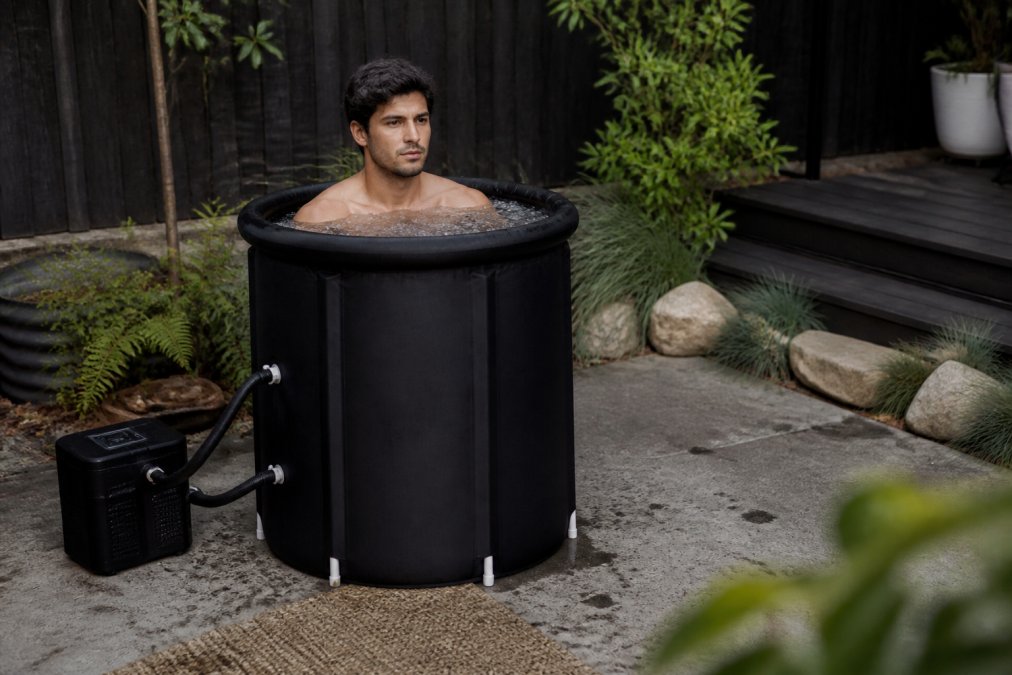
Premium systems ($1,500 and above) integrate chillers, filtration, and sanitation into single units or highly compatible systems. These aren't luxury purchases for most athletes, they're investments in consistency and convenience.
Cold Plunge Tub Maintenance Costs and Hidden Expenses
Operational costs and maintenance add up quickly and vary dramatically by climate, a factor most buyers overlook until their first utility bill.
Climate-Specific Operational Costs
Ice consumption and chiller efficiency depend on ambient temperature and humidity. A system costing $60 monthly in cool climates can cost $180+ in hot climates.
Cold climates (winter below 50°F): Basic inflatables need 10-15 lbs ice per session; hard-shell systems may need zero ice in winter. Monthly operational cost: $20-40 winter, $80-120 summer.
Temperate climates (50-75°F): Basic inflatables need 20-30 lbs ice per session; hard-shell systems need 10-20 lbs. Monthly cost: $100-150 year-round.
Hot climates (summer above 85°F): Basic inflatables need 30-40 lbs ice per session; hard-shell systems need 20-30 lbs. Monthly cost: $150-250 warm months, $80-120 cooler months.
High-humidity environments accelerate biofilm and algae growth, increasing sanitizer consumption by 30-50%. Budget an additional $15-25 monthly in humid regions.
Operational Costs to Budget For
Ice consumption: Basic inflatables use 20-40 lbs per session; hard-shell systems use 10-20 lbs. Annual ice costs range from $200 (hard-shell, cold climate) to $2,400+ (inflatable, hot climate).
Chiller electricity: Typical units consume 1-2 kW/hour. Running 3 hours daily costs $12-28 monthly; 8 hours daily costs $32-75 monthly. Annual costs range from $150 to $900+.
Water treatment: Basic systems need chlorine or salt sanitizers ($20-50 monthly). Premium ozone systems eliminate this but require cartridge replacement ($100-200 annually). Add 30-50% in humid climates.
Long-Term Durability and Warranty Protection
Budget inflatables offer 30-day returns only. Mid-range hard-shell systems provide 1-2 year warranties. Premium systems include 3-5 year warranties.
Inflatable models fail within 18-24 months. Hard-shell systems last 5-10 years. Premium systems last 7-12 years, though chillers may need replacement after 5-7 years.
Hot and humid climates reduce lifespan by 20-30%. UV exposure degrades inflatables faster. Cold climates with freeze-thaw cycles can crack hard-shell materials if water isn't drained properly.
Chiller replacement costs $2,000-5,000, making extended warranties valuable for serious athletes in harsh climates.
Climate-Adjusted Total Cost of Ownership Examples
Cold climate: Mid-range hard-shell with manual ice costs $800 annually. Temperate climate: Mid-range hard-shell with seasonal chiller costs $1,750 annually. Hot climate: Premium system with integrated chiller costs $1,500 annually. Premium systems offset higher electricity through eliminated ice purchases.
Total Cost of Ownership: What You'll Actually Spend
Let's calculate real five-year costs for different approaches.
Budget Inflatable Strategy: Purchase a $100 inflatable tub. Replace it every 18 months (3 tubs over 5 years): $300. Ice costs at $120/month for 5 months yearly: $3,000. Water treatment supplies: $500. Total: $3,800.
Mid-Range Hard-Shell Strategy: Purchase a $500 Cold Plunge Chill Pro. Maintenance and replacement parts: $300. Ice costs at $60/month for 5 months yearly: $1,500. Water treatment: $500. Total: $2,800.
Premium Self-Contained Strategy: Purchase a $4,990 Plunge Chill Max. Electricity costs at $20/month: $1,200. Ozone cartridge replacement: $200. Maintenance and repairs: $400. Total: $6,790.
Luxury Professional Strategy: Purchase a $14,000 Sun Home Cold Plunge Pro. Electricity and maintenance: $1,500 annually, or $7,500 over five years. Ozone system maintenance: $400. Total: $21,900.
The mid-range hard-shell approach can offer good value for many athletes, balancing durability and cost. Premium self-contained options may be suitable for those who use cold plunge therapy daily and prioritize automation. Consistent access to these automated systems facilitates a more disciplined recovery routine, allowing users to fully realize the daily cold plunge benefits that support long-term physiological adaptation.
According to athlete recovery guidelines from the American College of Sports Medicine, consistent cold water immersion protocols require reliability and convenience to maintain adherence.
Choosing the Right Cold Plunge for Your Recovery Goals
Your decision should balance three factors: frequency of use, available budget, and recovery goals.
Frequently Asked Questions
How much does a portable cold plunge tub cost in 2026?
Portable cold plunge tub costs can vary widely, from basic inflatable models to premium systems with integrated chillers and sanitation. Many athletes find mid-range options that balance durability, temperature control, and affordability. Your actual investment depends on whether you want manual ice replenishment or automated chiller technology, plus ongoing maintenance expenses. For current pricing, please visit our website.
What are the hidden costs of owning a portable cold plunge tub?
Beyond the initial purchase, budget for ice or electricity (if using a chiller), water filtration replacements, ozone or UV sanitation systems, and occasional repairs. Inflatable models may need replacement every 1-3 years, while hard-shell tubs last longer but cost more upfront. Setup space, drainage infrastructure, and climate control in your home can also add unexpected expenses to your total cost of ownership.
Are affordable cold plunge tubs under $500 worth buying?
Budget-friendly models under $500 work well for beginners testing cold water immersion or athletes with space constraints. Inflatable options offer portability and quick setup; hard-shell models in this range provide better durability. However, they typically require manual ice replenishment and lack advanced filtration, so maintenance demands are higher. Consider your recovery frequency and long-term commitment before choosing a budget option.
What is the price difference between inflatable and hard-shell cold plunge tubs?
Inflatable models start at $50-$150 and are highly portable but less durable. Hard-shell tubs range from $300-$5,999+ and offer better insulation, temperature retention, and longevity. Inflatable tubs suit occasional users or travelers; hard-shell designs are better for serious athletes planning regular cold water immersion. Hard-shell construction typically adds $200-$500+ to the base price but extends usable lifespan by years.
Do I need a chiller unit to use a portable cold plunge tub?
No. Manual ice-based models can work without electricity. However, chillers automate temperature control, reduce ice purchasing, and improve consistency for frequent users. Standalone chillers can be added to compatible tubs later. Choose based on your usage frequency, climate, and preference for convenience versus upfront savings. For specific product details and pricing, please visit our website.