 how-to
4-2-1 Rule for Athletes: Game Day Nutrition
Table of Contents
- What Is the 4-2-1 Rule for Athletes?
- Why Pre-Game Meal Timing Matters
- 4 Hours Before: The Pre-Competition Meal
- 2 Hours Before: The Pre-Game Snack
- 1 Hour Before: Hydration and Fuel
- Best Pre-Competition Snacks for Athletes
- Adjusting the 4-2-1 Rule for Your Sport and Body
- The 4-2-1 Rule and Post-Game Recovery
- Frequently Asked Questions
Last Updated: September 7, 2026
What Is the 4-2-1 Rule for Athletes?
The 4-2-1 rule for athletes is a simple nutrient timing framework that structures game day meals around three key windows: eating a full meal 4 hours before competition, a smaller snack 2 hours before, and a final hydration and fuel check 1 hour prior to start. This approach helps top off glycogen stores while ensuring your stomach is empty enough to avoid discomfort during high-intensity effort.
Most pre-game guides offer vague advice like "eat a good meal" without explaining why the clock matters. The 4-2-1 rule solves that by giving you a concrete schedule that balances energy availability against digestion rate.
Why Pre-Game Meal Timing Matters
The goal of pre-game nutrition is to have maximal glycogen stores and stable blood glucose levels at the exact moment you start competing, without carrying undigested food in your stomach. Nutrient timing aligns food intake with your body's metabolic demand and directly influences available energy. When you eat too close to game time, blood shunts to your digestive tract instead of your working muscles, leaving you sluggish or cramping.
How Digestion Rate Affects Performance
Your body digests different foods at different speeds, a concept known as gastric emptying. Simple sugars empty fastest, complex carbohydrates take longer, and fats and proteins slow the process down significantly. The 4-2-1 rule staggers your intake so each meal has time to move through the digestive tract before the starting gun fires.
4 Hours Before: The Pre-Competition Meal
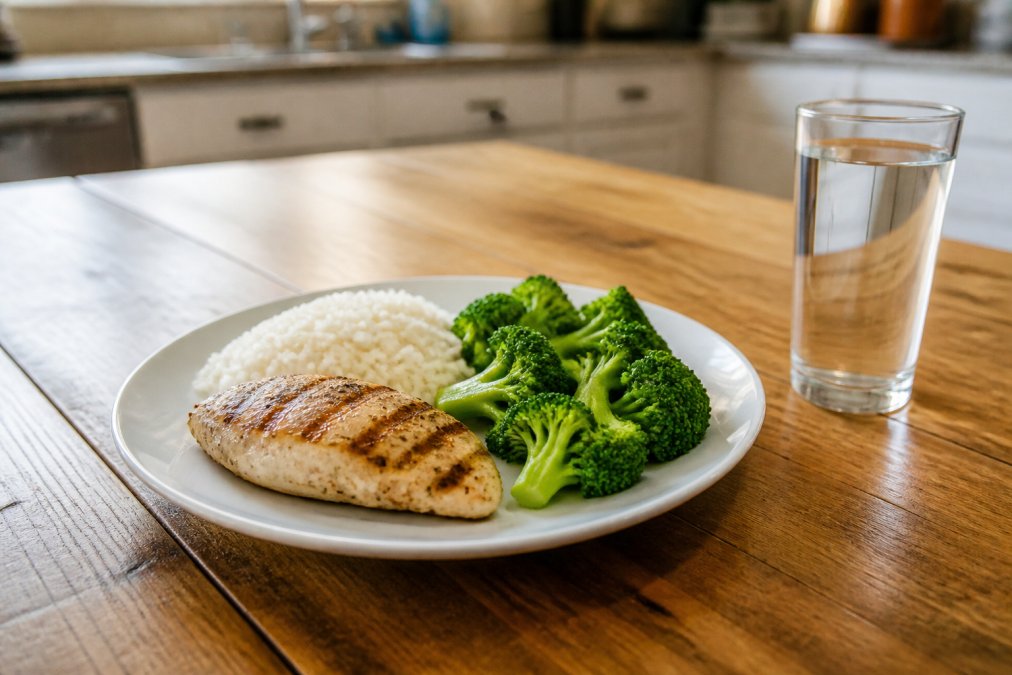
This is your main meal of the day, providing roughly 500 to 800 calories depending on your body size and the sport's energy demands. The plate should be built around complex carbohydrates like pasta, rice, or potatoes, with a moderate portion of lean protein and very little fat or fiber.
A typical example is grilled chicken with white rice and a small serving of cooked vegetables. For a vegetarian option, swap the chicken for tofu or a plant-based protein, keeping the carbohydrate base the same.
Sport-Specific Adjustments at the 4-Hour Mark
The standard 4-hour meal is a solid baseline, but the exact composition should shift based on your sport's demands.
For endurance athletes (events lasting over 60-90 minutes, like distance running, cycling, or soccer), the emphasis should be heavily tilted toward carbohydrates. Aim for a ratio of roughly 4 parts carbs to 1 part protein. A practical example is 2 cups of cooked pasta with 4 ounces of lean ground turkey and a light tomato sauce, maximizing glycogen storage for the duration of the event.
For power and team-sport athletes (sports with bursts of high-intensity effort, like sprinting, football, basketball, or weightlifting), the meal can be slightly more moderate in carbohydrates. Your events are shorter and rely more on phosphocreatine and fast-twitch muscle fibers. A ratio of 2 parts carbs to 1 part protein is often sufficient, such as a 6-ounce chicken breast with 1 cup of roasted sweet potatoes and a side of green beans.
The Vegetarian and Vegan Adaptation
A common gap in most 4-2-1 rule content is that it assumes an omnivorous diet. If you follow a plant-based diet, the timing framework remains identical, but you must be more deliberate about your carbohydrate and protein sources.
At the 4-hour mark, your meal should still be carb-centric, but you'll need to combine plant proteins to get a complete amino acid profile. A strong vegan option is a large bowl of quinoa (a complete protein) with roasted chickpeas, bell peppers, and a tahini-lemon dressing. Plant-based proteins often digest more slowly and can be higher in fiber, so test this meal during training to ensure it doesn't cause bloating. If it sits heavy, swap the quinoa for white rice and get protein from a vegan protein shake or a soy-based meat alternative.
The Calorie and Portion Guide
To make this practical, here is a portion guide based on body weight, more useful than a generic calorie range. Sports dietitians often start with 1 to 2 grams of carbohydrate per kilogram of body weight at this meal (eatright.org). For a 70 kg (154 lb) athlete, that translates to 70 to 140 grams of carbs, roughly 2.5 to 5 cups of cooked rice or pasta. Protein should be around 0.3 to 0.4 grams per kilogram, or about 20 to 30 grams. Fat should be kept under 15 grams to ensure rapid gastric emptying. This is not a time for creamy sauces or fried sides; save those for your post-game celebration meal.
2 Hours Before: The Pre-Game Snack
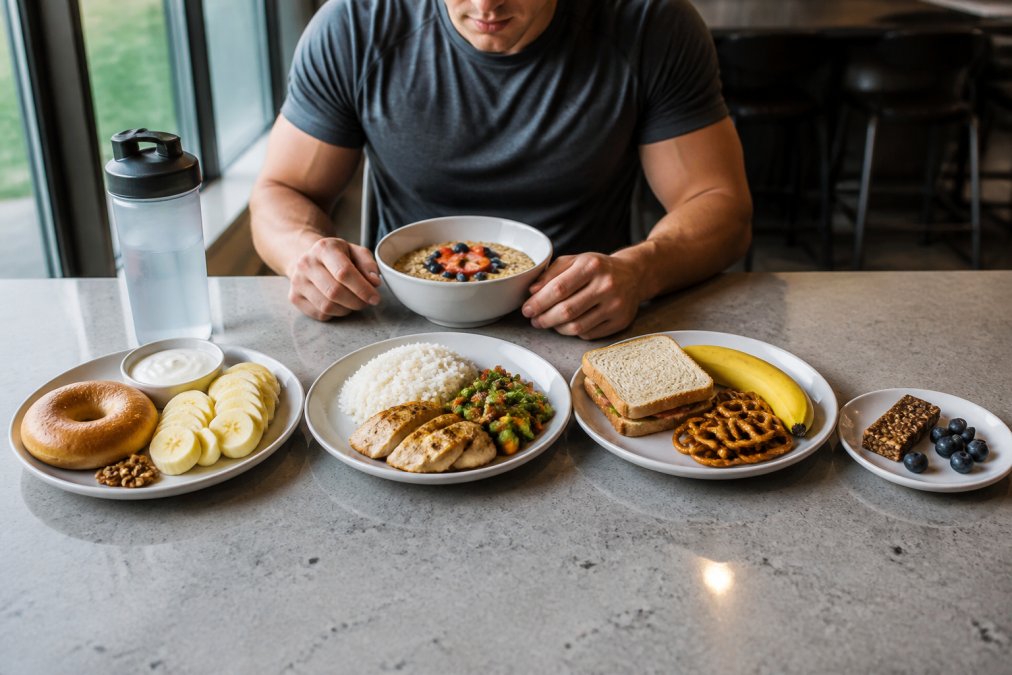
The 2-hour window calls for a smaller snack, roughly 200 to 300 calories, focused almost entirely on easy-to-digest carbohydrates with a trace of protein. Good options include a banana with a spoonful of peanut butter, a plain bagel with honey, or a sports bar with a simple ingredient list.
Avoid anything high in fat, heavy protein, or excessive fiber, since those slow digestion and can sit heavy during warm-ups. This is also not the time to experiment with new foods. Stick to options you have tested in training.
1 Hour Before: Hydration and Fuel
With one hour to go, your focus shifts to hydration status and a final small intake of fast-acting carbohydrates. Aim to drink 8 to 16 ounces of water or an electrolyte drink, depending on your sweat rate and the environment. If you feel hungry or low on energy, a small piece of fruit or a few sports chews can provide a quick lift without filling your stomach.
The key distinction at the 1-hour mark is that you are no longer eating a meal; you are managing fluid intake and blood glucose levels. Being well hydrated before exercise improves performance, while even mild dehydration can increase perceived effort. Sip steadily rather than chugging, and use this time to confirm your water bottle is full and your pre-match routine is locked in.
Best Pre-Competition Snacks for Athletes
Choosing the best pre-competition snacks for athletes comes down to foods that are high in carbohydrates, low in fat and protein, and familiar to your digestive system. Here is a practical list for the 2-hour window, each providing roughly 200 to 300 calories:
- Banana with a thin layer of peanut butter
- White bread bagel with jam or honey
- Low-fiber cereal with skim or plant milk
- Plain rice cakes with a light spread of nut butter
- A serving of applesauce or a ripe pear
- Pretzels with a small sports drink
The common thread is simplicity. These snacks are low in fat, so they empty from the stomach quickly and are unlikely to cause discomfort during high-intensity movement.
The Easy-to-Digest Swap Guide
Most articles stop at a list of snacks, but they fail to address the single biggest variable in pre-game fueling: your digestive system. Up to 50% of athletes report some form of GI distress during competition, and the 2-hour snack is often the culprit. Here is a practical swap guide for athletes with sensitive stomachs.
If you struggle with fiber: Swap the banana with peanut butter for a peeled, very ripe banana (the ripening process breaks down starches into simpler sugars). Swap the whole-grain bagel for a plain white bagel. Swap the applesauce with pulp for a smooth, strained applesauce. The goal is to minimize insoluble fiber, which draws water into the gut and can cause cramping.
If you struggle with dairy or protein: Swap the low-fiber cereal with skim milk for a rice-based cereal with a lactose-free milk or a small amount of almond milk. Swap the nut butter on rice cakes for a simple honey or jam spread. Nut butters, even in small amounts, can be slow to digest for some athletes. If you need a bit of protein, consider a liquid source like a few sips of a protein shake or a low-fiber protein bar, which are often better tolerated than solid food.
If you struggle with solid food entirely: This is more common than you think, especially for athletes with pre-game anxiety. The solution is to shift your 2-hour snack to a liquid form. A 200-300 calorie fruit smoothie made with a banana, a handful of berries, and a sports drink (not milk or yogurt) provides the same carbohydrate load without the solid mass in your stomach. Alternatively, 16 to 20 ounces of a commercial sports drink like Gatorade or Powerade delivers 100-150 calories of easily absorbed carbs.
The 1-Hour Fuel Check
While the 2-hour snack is your last real food, the 1-hour mark is for a final top-up if needed. If you feel hungry or low on energy, use a few sports chews (like Clif Bloks or GU Chomps) or a small handful of jelly beans. These are essentially pure glucose and fructose, which empty from the stomach in under 30 minutes. If you are well-fueled from your 4-hour meal and 2-hour snack, you may not need anything at the 1-hour mark except water. Listen to your body; the 4-2-1 rule is a framework, not a mandate to eat if you aren't hungry.
Adjusting the 4-2-1 Rule for Your Sport and Body
Individualizing Based on Sport Type
The 4-2-1 rule is a framework, not a rigid law. Endurance athletes competing for over an hour may need a larger carbohydrate load at the 4-hour mark and an additional snack between the 2-hour and 1-hour windows. Power and team sport athletes often perform fine with the standard timing because their events are shorter and rely less on continuous glycogen depletion.
Managing Digestive Sensitivity
Athletes with sensitive stomachs or a history of GI distress during competition should push the clock back slightly. If you know you digest food slowly, move the main meal to 4.5 or 5 hours before start time and keep the 2-hour snack very small or liquid-based, such as a fruit smoothie or a sports drink. Pre-competition anxiety can also slow digestion, so if nerves are part of your routine, err on the side of eating less rather than more in the final hours.
The 4-2-1 Rule and Post-Game Recovery
The structure of the 4-2-1 rule also sets you up for effective recovery, because it ensures you finish the event without a heavy meal still digesting. When the game ends, your body is primed to accept nutrients, and post-exercise recovery should begin within 30 to 60 minutes.
A recovery shake or a meal of chicken with rice and vegetables within this hour supports the work you did before the game. The American College of Sports Medicine position stand on nutrition and athletic performance outlines that proper nutrient timing around exercise, including the post-activity window, is central to performance optimization and adaptation. The 4-2-1 rule is not just about the hours before the event; it is the first half of a complete game day nutrition cycle that extends through recovery.
Game day nutrition does not need to be complicated. The 4-2-1 rule for athletes replaces guesswork with a simple timeline that supports energy, digestion, and recovery. Pair this framework with reliable fueling tools, and check out the sports dietetics practice guidelines from the Academy of Nutrition and Dietetics for deeper meal planning advice. Shop Now and build a game day routine that works as hard as you do.
Frequently Asked Questions
What is the 4-2-1 rule for athletes?
The 4-2-1 rule is a game day nutrition strategy that times food intake to match your body's digestion rate. It means eating a full meal 4 hours before, a smaller snack 2 hours before, and a light, fast-digesting snack 1 hour before competition. This approach tops off glycogen stores without leaving food undigested in your stomach, which helps you avoid cramps and sluggishness when you need to perform.
What should athletes eat 4 hours before a competition?
Four hours before competition, focus on a meal that is high in complex carbohydrates, moderate in protein, and low in fat and fiber. Good options include grilled chicken with rice and steamed vegetables or pasta with a lean meat sauce. This gives your body enough time for gastric emptying, so the food is digested and converted into usable energy before warm-ups begin.
What are the best snacks to eat 1 hour before a game?
One hour before a game, stick to simple carbohydrates that digest quickly and won't cause GI distress. A banana, a slice of white bread with honey, or a small sports gel are solid choices. Avoid protein, fat, and heavy fiber at this stage since they slow digestion and can leave food in your stomach during play. Keep the portion small to maintain stable blood glucose levels.
How does the 4-2-1 rule differ from other nutrition strategies?
Most nutrition advice focuses on what to eat, but the 4-2-1 rule focuses on when to eat it. Unlike general pre-game meal suggestions, this method provides a specific countdown that aligns food volume with your body's digestion rate. The structure helps athletes who struggle with timing or portion sizes, ensuring they are fueled but not overly full when competition starts.