 how-to
Is Protein Powder Necessary for Muscle Gain?
Table of Contents
- The Straight Answer: Is Protein Powder Necessary?
- How Much Protein Do You Need to Build Muscle?
- Building Muscle Without Protein Powder
- Protein Powder vs. Whole Foods for Muscle Gain
- How Many Scoops of Protein Powder Per Day?
- When Protein Powder Actually Becomes Useful
- The Real Requirements: Resistance Training and Total Calories
- Conclusion
- Frequently Asked Questions
Last Updated: October 15, 2026
The Straight Answer: Is Protein Powder Necessary?
No, protein powder is not necessary for muscle gain. The real requirements are resistance training and eating enough total protein, whether that protein comes from powder, chicken, eggs, beans, or dairy.
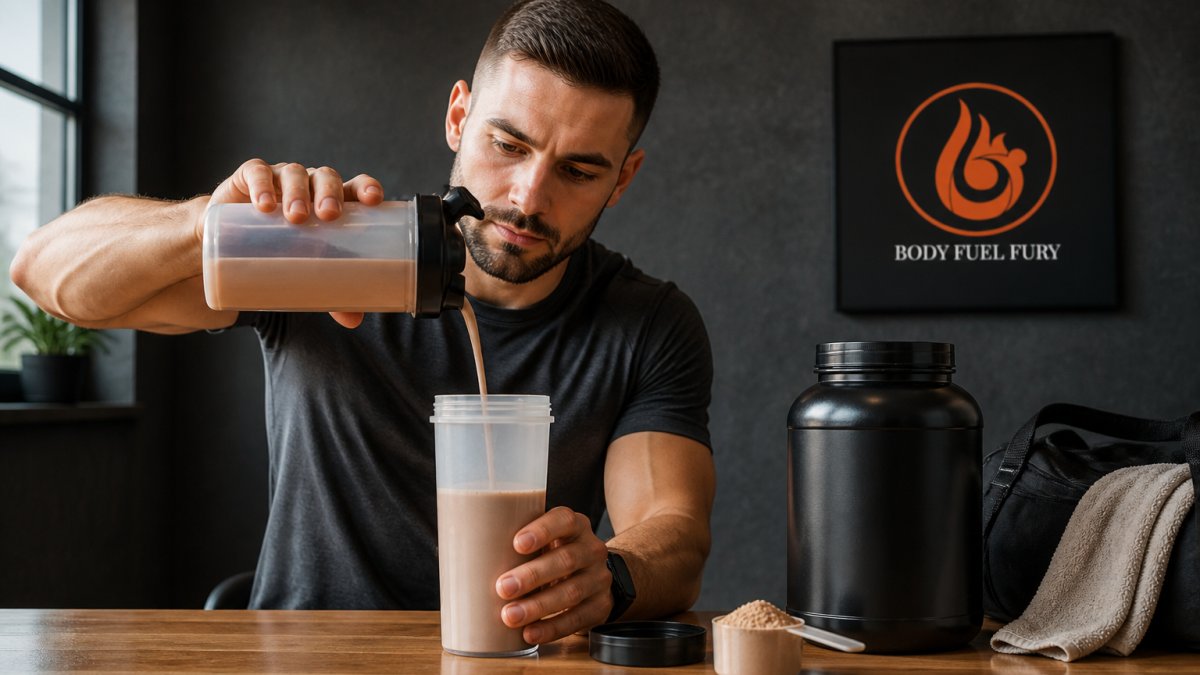
That said, protein powder serves a purpose. It's convenient, portable, and mixes into drinks in seconds. For people juggling work, family, and training, powder can be the difference between hitting their protein target and falling short.
At Body Fuel Fury, we work with fitness enthusiasts across the spectrum, from beginners returning to training after years away to serious lifters chasing strength gains. The people who succeed aren't the ones with the fanciest supplements.
How Much Protein Do You Need to Build Muscle?
Most people building muscle need 0.7 to 1 gram of protein per pound of body weight per day. A 180-pound person would aim for roughly 125 to 180 grams daily.
Protein provides the amino acids that rebuild muscle tissue after training. Without enough protein, your training stimulus doesn't translate into growth.
Here's what that looks like in practice:
- Lighter training (3-4 sessions per week): 0.7 grams per pound of body weight
- Moderate training (4-5 sessions per week): 0.8-0.9 grams per pound
- Heavy training (5-6+ sessions per week): 1 gram per pound or slightly higher
If you're new to training or returning after time off, start at the lower end.
The total matters more than timing. The old advice to eat protein within 30 minutes after training is overblown. What drives muscle growth is hitting your daily protein target and training consistently.
Building Muscle Without Protein Powder
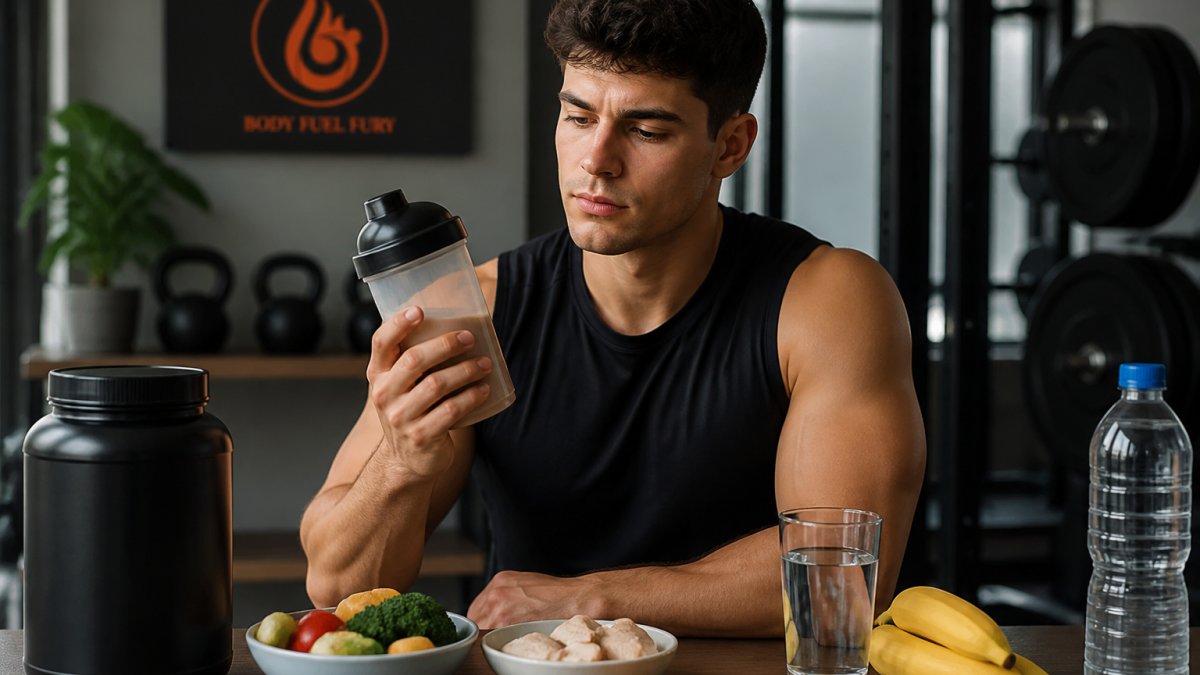
Whole foods deliver everything protein powder does: amino acids, calories, and nutrients your muscles need to grow. Many elite athletes build impressive muscle eating only whole foods. Powder is optional, not essential. The challenge isn't whether whole foods work, but whether you'll eat enough of them consistently.
Whole-Food Protein Sources That Work
The best protein sources are foods you actually enjoy eating. Here are the reliable options:
Lean meats and poultry:
- Chicken breast: roughly 31 grams protein per 3.5 ounces
- Lean ground beef: roughly 22 grams per 3.5 ounces
- Turkey: roughly 29 grams per 3.5 ounces
- Fish (salmon, cod, tilapia): roughly 25-26 grams per 3.5 ounces
Eggs and dairy:
- Whole eggs: roughly 6 grams protein per egg
- Greek yogurt: roughly 10-20 grams per serving depending on brand
- Cottage cheese: roughly 14 grams per half-cup
- Milk: roughly 8 grams per cup
Plant-based options:
- Lentils: roughly 9 grams per cooked half-cup
- Chickpeas: roughly 15 grams per cooked cup
- Tofu: roughly 10 grams per 3.5 ounces
- Beans: roughly 8-15 grams per cooked cup depending on type
The key is variety. Spread protein across the day and you'll naturally hit your number.
A Sample Day of Eating for Muscle Growth
Here's what a practical day looks like for someone aiming for 150 grams of protein:
Breakfast: 3 whole eggs scrambled with 2 slices whole-wheat toast and a glass of milk
- Protein: roughly 25 grams
Mid-morning snack: Greek yogurt with berries
- Protein: roughly 15 grams
Lunch: 5 ounces grilled chicken breast with brown rice and steamed broccoli
- Protein: roughly 35 grams
Pre-training snack: Banana with 2 tablespoons peanut butter
- Protein: roughly 8 grams
Dinner: 5 ounces salmon with sweet potato and asparagus
- Protein: roughly 35 grams
Evening snack: Cottage cheese with almonds
- Protein: roughly 18 grams
Daily total: roughly 136 grams protein
This isn't fancy, but it works because it's real food you can buy at any grocery store, prepare in under an hour, and actually enjoy. That consistency matters far more than perfect macros.
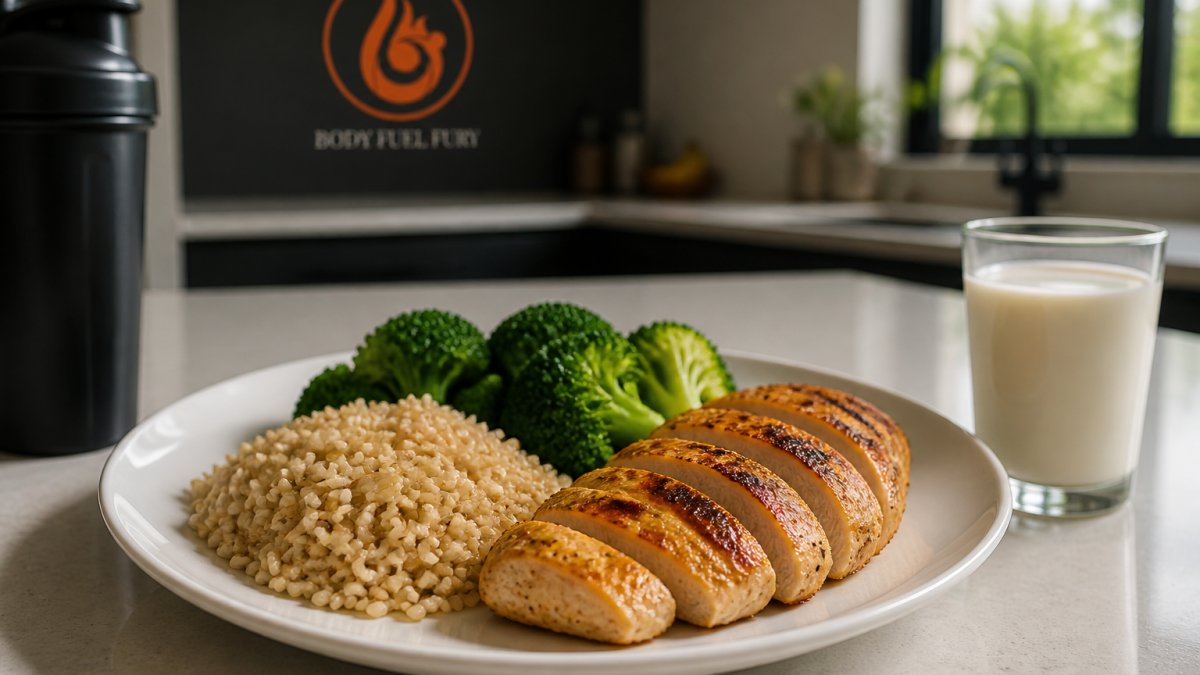
Protein Powder vs. Whole Foods for Muscle Gain
Both build muscle equally well. The difference is practical, not biological.
Whole foods offer:
- Satiety (they fill you up longer)
- Micronutrients (vitamins, minerals, fiber)
- Real taste and variety
- No mixing or cleanup
Protein powder offers:
- Speed (mix in 30 seconds)
- Portability (drink at the gym or office)
- Lower cost per gram in many cases
- No cooking required
Hit your daily protein target with whole foods and you'll gain muscle at the same rate as someone using powder. Fall short, regardless of source, and you'll struggle.
If you prefer whole foods and have time to prepare them, stick with whole foods. If you're busy and powder helps you hit your target when cooking isn't realistic, use powder. Many people do both.
The worst choice is using powder as a substitute for training or eating in a caloric surplus. Protein alone doesn't build muscle.
How Many Scoops of Protein Powder Per Day?
There's no magic number of scoops. The only question that matters is: how many grams of protein do you still need after whole foods, and how much of that gap will powder fill?
A worked example for a 180-pound person aiming for 150 grams per day:
- Breakfast (3 eggs, oatmeal, milk): about 30 grams
- Lunch (5 ounces chicken, rice, vegetables): about 40 grams
- Dinner (5 ounces salmon, potato, salad): about 35 grams
- Snacks (Greek yogurt, nuts, fruit): about 20 grams
- Whole-food total: about 125 grams
- Remaining gap: about 25 grams
That gap is roughly one scoop of a typical 20-25 gram-per-scoop powder. If your whole-food intake is lower on a given day, the gap grows and so does the scoop count. If you ate a bigger dinner, the gap shrinks and you may not need powder at all.
Why the Scoop Count Changes Day to Day
Treating scoops as a fixed daily ritual is where most people go wrong. Your whole-food intake fluctuates: a restaurant lunch might deliver 50 grams of protein, a rushed morning just 10. The powder should absorb that fluctuation, not add to it.
A simple habit: at the end of each day, estimate your whole-food protein. Within 20-25 grams of your target, one scoop closes the gap. 40-50 grams short, two scoops. Hit your target from food alone, skip the powder.
Does Timing Matter for Those Scoops?
The old advice to slam a shake within 30 minutes of training has been softened by newer research. The "anabolic window" is much wider than once believed, and total daily protein intake matters more than the exact minute you drink a shake.
That said, spreading protein across three to five eating occasions is a reasonable pattern. Muscle protein synthesis responds to repeated doses of amino acids, so a steady supply beats one giant bolus at night. A shake fits naturally as one of those occasions, not as a special post-workout ritual.
Practical placements for a scoop:
- With breakfast if you struggle to eat protein early in the day
- Between meals when the gap between lunch and dinner is long
- After training because it's convenient, not because the clock demands it
- Before bed if you're short on the day and want to close the gap without a heavy meal
Reading the Label Before You Count Scoops
Scoop sizes are not standardized. One brand's scoop might deliver 20 grams of protein; another's might deliver 30. Some "protein" powders are mostly maltodextrin or added sugars. Before assuming a scoop equals a serving of protein, check the nutrition panel for grams of protein per scoop, not grams of powder.
A few label details worth scanning:
- Protein per scoop (the number that actually matters)
- Scoops per container (tells you the real cost per gram)
- Added sugars and fillers (some blends are closer to dessert than supplement)
- Protein source (whey, casein, soy, pea, rice, or a blend)
- Allergen statements (milk, soy, and egg are common)
The bottom line: scoops are a math problem, not a rule. Calculate your gap, close it with food first, and use powder only for what's left.
When Protein Powder Actually Becomes Useful
Protein powder makes sense when whole foods aren't practical:
You're traveling: Packing chicken and rice in a suitcase isn't realistic. Powder and a shaker bottle weigh nothing and mix with hotel tap water.
Your schedule is unpredictable: Some days you have time to cook, others you're running between meetings. Powder bridges those gaps.
You're training twice daily: Athletes doing morning and evening sessions often can't eat a full meal between them. A quick shake keeps protein intake up without feeling overstuffed.
You dislike cooking: Some people genuinely prefer drinking calories to eating them. Powder works.
You're on a tight budget: Whole foods like chicken and fish can be expensive. Protein powder bought in bulk often costs less per gram.
The Real Requirements: Resistance Training and Total Calories
Here's what actually builds muscle:
Resistance training: Lift weights or do bodyweight exercises that challenge your muscles. That challenge triggers the adaptation response. Without it, protein does nothing special.
Progressive overload: Gradually increase difficulty: more weight, more reps, more sets, or better form. Stagnation means no growth.
Total calories: Eat enough overall calories to support muscle growth. A caloric deficit makes muscle gain nearly impossible, even with perfect protein intake.
Consistency: Train regularly, eat enough protein consistently, and do this for weeks and months. Muscle builds through sustained effort.
Recovery: Sleep, stress management, and rest days matter. Your muscles grow during recovery, not during the workout. Training hard but sleeping four hours nightly will leave you struggling.
Protein powder doesn't change any of these requirements. It's a tool that makes hitting your protein target easier on busy days.
Conclusion
Protein powder is not necessary for muscle gain. You build muscle through resistance training, eating enough total calories, and consuming adequate protein, which you can get entirely from whole foods. Powder is useful when convenience matters: busy days, travel, intense training. But it's optional, not essential.
At Body Fuel Fury, we believe in progress over perfection. Whether you're returning to fitness after years away or pushing toward advanced strength goals, the approach is the same: train consistently, eat real food, and use tools like protein powder when they genuinely fit your life.
Frequently Asked Questions
Can you build muscle without protein powder?
Yes. Muscle growth depends on adequate total protein intake, resistance training, and progressive overload, not on the source of that protein. Whole foods like chicken, eggs, Greek yogurt, cottage cheese, beef, fish, beans, and legumes deliver the amino acids your muscles need to repair and grow. Many athletes build significant muscle mass using only whole-food protein sources.
How much protein do I need to build muscle?
General guidance suggests 0.7 to 1 gram of protein per pound of body weight daily when you're in a calorie surplus and doing regular resistance training. A 180-pound person aiming to build muscle would target 125-180 grams per day. This total can come entirely from food, or split between food and supplements. Consistency matters more than hitting an exact number.
How many scoops of protein powder per day should I take?
Most people use 1-2 scoops per serving, typically once or twice daily. A standard scoop delivers 20-30 grams of protein. If you need 150 grams of protein daily and eat 100 grams from whole foods, one or two scoops of powder can fill the gap. Don't use powder as your only protein source unless whole foods genuinely aren't available.
Is protein powder better than whole foods for building muscle?
No. Both work equally well for muscle growth because they deliver amino acids. Whole foods offer fiber, micronutrients, and satiety that powder doesn't. Powder is convenient for busy schedules and post-workout timing. The best choice is whichever helps you hit your daily protein target consistently. Most successful lifters combine both.