 how-to
How Long to Use a Foam Roller for Recovery
Table of Contents
- Understanding Foam Rolling for Recovery
- How Long to Foam Roll Each Muscle Group
- Total Session Duration for Foam Rolling
- Foam Rolling After a Workout: Timing and Technique
- How Often to Use a Foam Roller for Best Results
- Foam Rolling Before or After a Workout
- Technique and Safety: Rolling the Right Way
- Building Your Foam Rolling Routine
- Frequently Asked Questions
Last Updated: October 13, 2026
Understanding Foam Rolling for Recovery
Foam rolling is a self-massage technique that uses a cylindrical tool to apply pressure to muscles and connective tissue. At Body Fuel Fury, we know proper recovery matters as much as the workout itself.
The idea is simple: roll slowly over tight or sore muscles to release tension and improve blood flow.
How Long to Foam Roll Each Muscle Group
The duration for each muscle group typically ranges from 30 to 90 seconds per area, enough time for muscles to respond to pressure without overworking them.
Major Muscle Groups and Time Guidelines
Larger muscles like quads, hamstrings, and back handle longer rolling times; smaller or sensitive areas need less. Here's a practical breakdown:
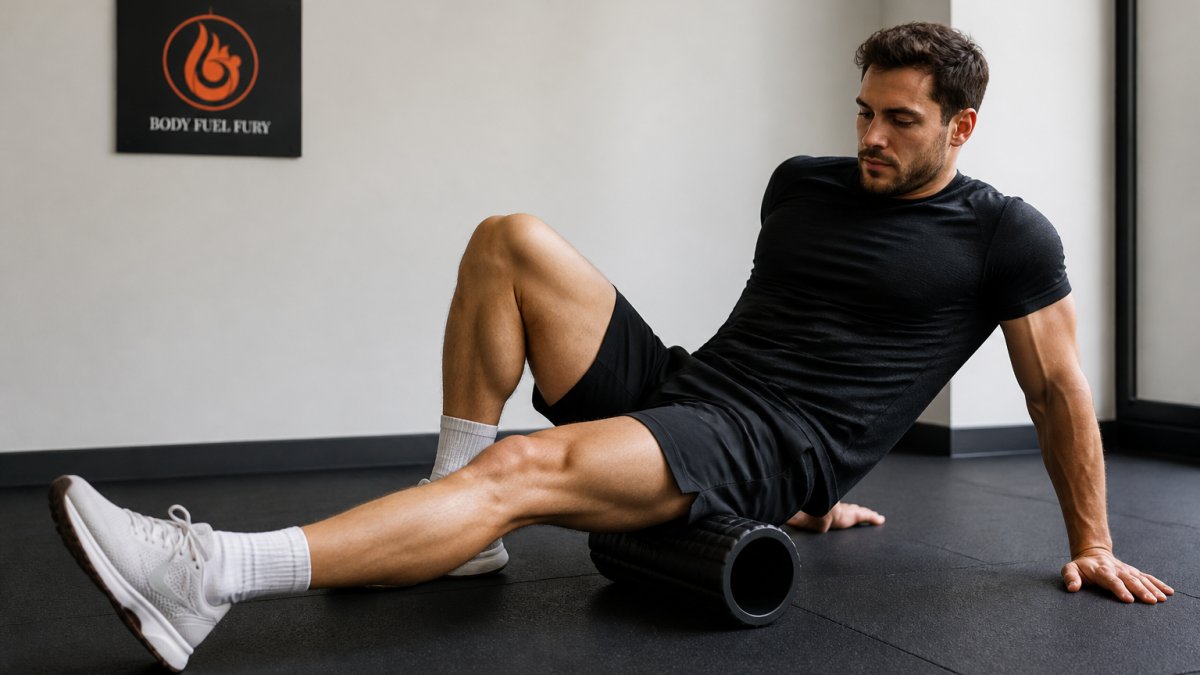
- Quads: 60-90 seconds per leg
- Hamstrings: 60-90 seconds per leg
- Calves: 30-60 seconds per leg
Match time to muscle size: quads benefit from the longer end of the range, while smaller calves do fine at 30-60 seconds.
Adjusting Duration by Experience Level
Beginners need less time because their muscles are less adapted to pressure.
Beginners (first 2-4 weeks): 30-45 seconds per muscle group, smooth controlled movements, light to moderate pressure.
Intermediate users (1-3 months in): 45-75 seconds per muscle group, gradually increasing pressure and slower, more deliberate patterns.
Muscles adapt, soreness decreases, and you handle more intense rolling. But quality of movement matters more than duration.
Total Session Duration for Foam Rolling
Total session time depends on how many muscle groups you roll and how long you spend on each. The popular "5 to 10 minutes" figure only makes sense once you know what you're rolling.
The Reconciliation Rule
Here's the rule that ties per-muscle time to total session time:
Total session time = (number of muscle groups) × (time per group) + transition time.
Transitions, repositioning, finding the tender spot, add 15-30 seconds per muscle group, which is why a "5-minute session" rarely feels like 5 minutes of rolling. Using the standard 30-90 second per-muscle range:
| Session type | Muscle groups | Time per group | Rolling time | With transitions |
|---|---|---|---|---|
| Quick touch-up | 2-3 | 30-45 sec | 1.5-2.5 min | 3-4 min |
| Focused session | 3-4 | 45-60 sec | 2.5-4 min | 4-6 min |
| Full-body session | 5-6 | 60-90 sec | 5-9 min | 7-11 min |
| Thorough full-body | 6-8 | 60-90 sec | 6-12 min | 9-14 min |
That's why "5 to 10 minutes" holds up for a focused-to-full-body session, but only if you're not hitting every muscle group at the top of its range. If you are, expect 10-14 minutes.
Why the Range Exists
A 2023 systematic review found most studies used roughly 1-2 minutes per muscle group, with total sessions of 5-20 minutes. Effects on soreness and range of motion were modest. Rolling longer doesn't mean recovering better. Most practitioners settle on a practical middle ground:
- If you have 3 minutes: roll your two tightest areas for 45-60 seconds each.
- If you have 5 minutes: roll three to four areas for 45-60 seconds each.
- If you have 10 minutes: roll five to six areas for 60-90 seconds each.
The Diminishing-Returns Ceiling
There's no evidence that rolling one muscle group for 5 minutes beats 90 seconds. The nervous system response that reduces tension, a thixotropic effect, where tissue becomes more pliable under sustained, gentle load, plateaus quickly. Beyond roughly 2 minutes per muscle group, you're mostly adding friction and time.
Foam Rolling After a Workout: Timing and Technique
Foam rolling works best as part of your post-workout cool-down, reducing delayed-onset muscle soreness.
Cool-Down Routines and Post-Exercise Recovery
Your post-workout window is ideal: muscles are warm, blood flow is elevated, and your body is primed for recovery. Rolling right after exercise, or within 15-30 minutes, can reduce soreness and improve next-day mobility, optimal foam roller recovery duration for post-workout sessions.
A typical post-workout routine:
- Finish your workout and rest for 2-3 minutes
- Start on your largest muscle groups
- Spend 60-90 seconds on each area
- Move to smaller muscle groups
- Finish with light stretching (optional)
The total is usually 5 to 10 minutes, it fits into your cool-down without extending your gym session.
How Often to Use a Foam Roller for Best Results
Consistency matters more than intensity: regular rolling beats occasional aggressive sessions.
Daily Use vs. Rest Day Recovery
You can safely use a foam roller every day. Daily rolling maintains mobility, reduces soreness, and supports recovery between workouts.
Daily rolling schedule:
- Roll for 5-10 minutes after workouts
- Roll for 3-5 minutes on rest days
- Focus on areas that feel tight or sore
On rest days, keep it lighter, a 3-5 minute session targeting your tightest areas is enough. Consistent rollers report better mobility and less soreness, but even 3-4 times per week delivers meaningful results.
Foam Rolling Before or After a Workout
Timing affects how foam rolling helps your body. Before and after workouts serve different purposes.
Pre-Workout Mobility vs. Post-Workout Recovery
Pre-workout foam rolling: Keep it light and brief, 2-3 minutes on tight areas. The goal is mobility and preparation, not fatigue.
Post-workout foam rolling: This is where most of the magic happens.
Many athletes do both: a quick 2-3 minute mobility session before, then a longer 5-10 minute recovery session after.
Technique and Safety: Rolling the Right Way
How you roll matters as much as how long. Most guides say roll 60-90 seconds and stop, but knowing when not to roll is just as important.
Controlled Movement and Pressure Guidelines
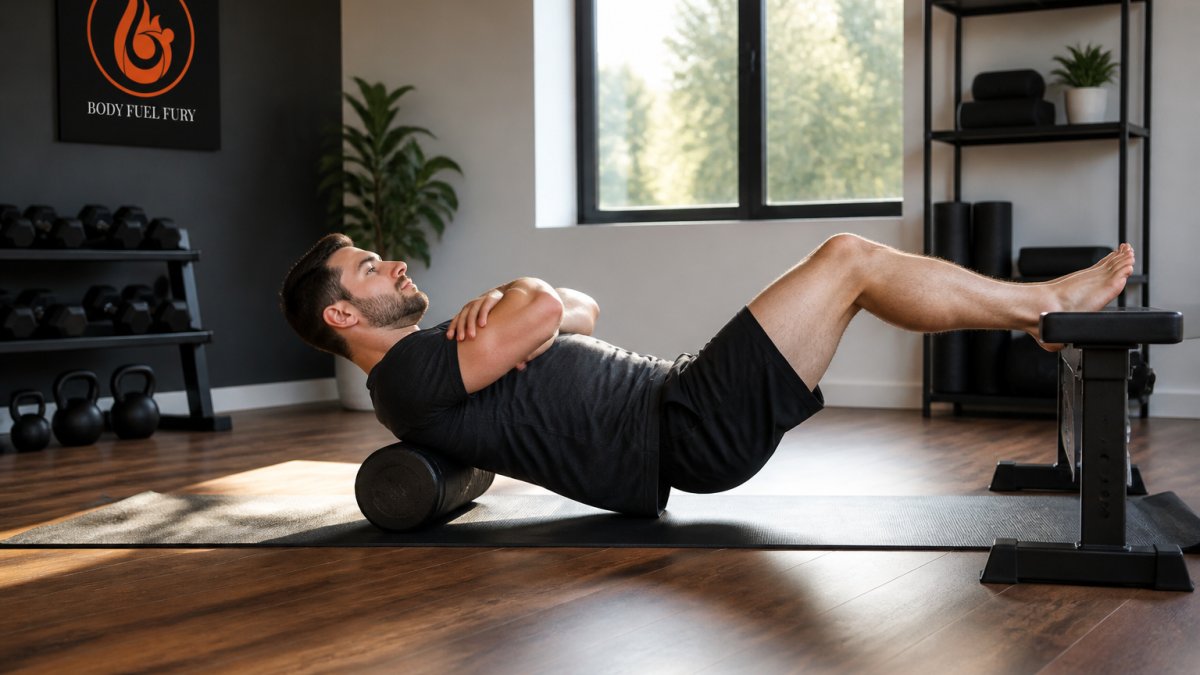
The best foam rolling is slow and deliberate, fast, aggressive rolling irritates tissue instead of helping it.
Proper technique:
- Roll at a slow, steady pace, roughly 1 inch per second
- Apply moderate pressure: intense but not sharp
- Breathe steadily; holding your breath signals tension
- Move in one direction, then reverse
Controlled rolling gives your nervous system time to signal muscles to relax; fast rolling skips that window. On a 1-10 pressure scale, aim for 5-7, "uncomfortable but conversational." If you're grimacing and holding your breath, you're at an 8+.
Tolerable Pressure vs. Nerve Pain
This distinction is the most important safety skill in foam rolling, and most guides never explain it.
Tolerable pressure feels like: a deep, diffuse ache that fades as you breathe; "good-bad" pressure you can relax into; sensation localized to the muscle belly.
If you feel the second list, stop immediately and move off that spot. Nerves don't respond to rolling the way muscle does.
Areas to Avoid or Approach With Caution
Some regions are not good candidates for direct foam roller pressure:
- Lower back (lumbar spine): Rolling directly over the spine can compress vertebrae. Roll the muscles beside the spine, not on it.
- Neck and cervical spine: Too delicate for bodyweight pressure.
- Behind the knee (popliteal fossa): Nerves and blood vessels run close to the surface here.
- Inner elbow and armpit: Same reason, major nerve and vessel clusters.
When to Skip Foam Rolling Entirely
Foam rolling is generally safe for healthy adults, but get clearance from a healthcare provider first if you have:
- Suspected or diagnosed nerve compression (sciatica, piriformis syndrome, thoracic outlet issues)
- Recent surgery in the area you want to roll
- Blood clotting disorders or you're on blood thinners, rolling can dislodge clots
- Varicose veins or vascular conditions in the target area
This isn't a scare list, it's a filter. Most readers can roll safely, but if any of the above applies, talk to a physical therapist or physician.
Signs to Stop Mid-Session
Even if you're cleared to roll, stop if you notice sharp or shooting pain; numbness or tingling that doesn't resolve off the spot; bruising during or right after rolling; swelling that increases; or pain that worsens over 24 hours.
Building Your Foam Rolling Routine
The best foam rolling routine is one you'll stick with, match it to your schedule and fitness level.
Quick Sessions for Busy Days
On busy days, a 3-5 minute quick roll beats nothing.
Quick 3-5 minute routine:
- Quads: 45 seconds per leg
- Hamstrings: 45 seconds per leg
- Calves: 30 seconds per leg
- Back: 45 seconds
This hits your largest muscle groups in minimal time, perfect when you're pressed but still want recovery support.
Full Recovery Routines by Workout Type
Different workouts stress different muscles, tailor your rolling to what you just did.
After a leg day: Quads 90 sec/leg, hamstrings 90 sec/leg, calves 60 sec/leg, glutes 60 sec/side.
After upper body work: Back 90 sec, chest 45 sec, shoulders 45 sec, arms 30 sec/arm.
Addressing the muscles you stressed speeds recovery and reduces next-session soreness.
Whether you're just starting your fitness journey or you've been training for years, foam rolling fits into your recovery plan. At Body Fuel Fury, we believe recovery is part of your success. Pair your routine with quality equipment, proper nutrition, and rest, and you'll notice real improvements in how you feel and perform.
Frequently Asked Questions
How long should you foam roll each muscle group?
Most muscle groups benefit from 30 to 90 seconds of foam rolling. Larger areas like your quads and back may need up to two minutes, while smaller muscles like calves need closer to 30 to 60 seconds. Focus on slow, controlled rolling rather than rushing through. The goal is to find sore or tight areas and spend extra time there, not to hit a specific duration.
Can you foam roll too much?
Yes. Overuse of a foam roller can lead to irritation, bruising, or muscle soreness. Limit sessions to 5 to 10 minutes total, and avoid rolling the same tight area repeatedly in one session. If you experience sharp pain or increased soreness, reduce frequency or duration. Progress over perfection means listening to your body and adjusting as needed.
Is it okay to foam roll every day?
Light foam rolling on rest days is generally safe and can support recovery. However, intense or lengthy sessions should be limited to 3 to 4 times per week. On rest days, keep sessions short (5 minutes) and focus on mobility rather than deep pressure. This approach balances recovery benefits with avoiding overuse.
Should you foam roll before or after a workout?
Post-workout foam rolling is more effective for recovery. Spend 5 to 10 minutes rolling sore or tight areas after exercise when muscles are warm and responsive. Before workouts, use light rolling or dynamic stretching for 2 to 3 minutes to improve range of motion. Save deeper, longer sessions for after your cool-down.
Recovery doesn't have to be complicated. A simple foam rolling routine, 5 to 10 minutes per session, focused on controlled technique and consistent use, supports better mobility, reduced soreness, and faster bounce-back between workouts. At Body Fuel Fury, we help you build the complete recovery toolkit with high-quality foam rollers and recovery gear designed for every fitness level. Shop now and invest in the recovery your body deserves.