 how-to
Red Light Therapy for Muscle Recovery: Does It Work?
Table of Contents
- What Is Red Light Therapy and How Does It Work?
- Photobiomodulation and Muscle Recovery: What Research Shows
- Red Light Therapy for Muscle Soreness and DOMS
- Timing and Treatment Protocols: When and How to Use It
- Red Light Therapy Safety and Side Effects
- Effects on Muscle Fatigue and Exercise Performance
- Realistic Expectations: What Red Light Therapy Can and Cannot Do
- Frequently Asked Questions
Last Updated: October 5, 2026
What Is Red Light Therapy and How Does It Work?
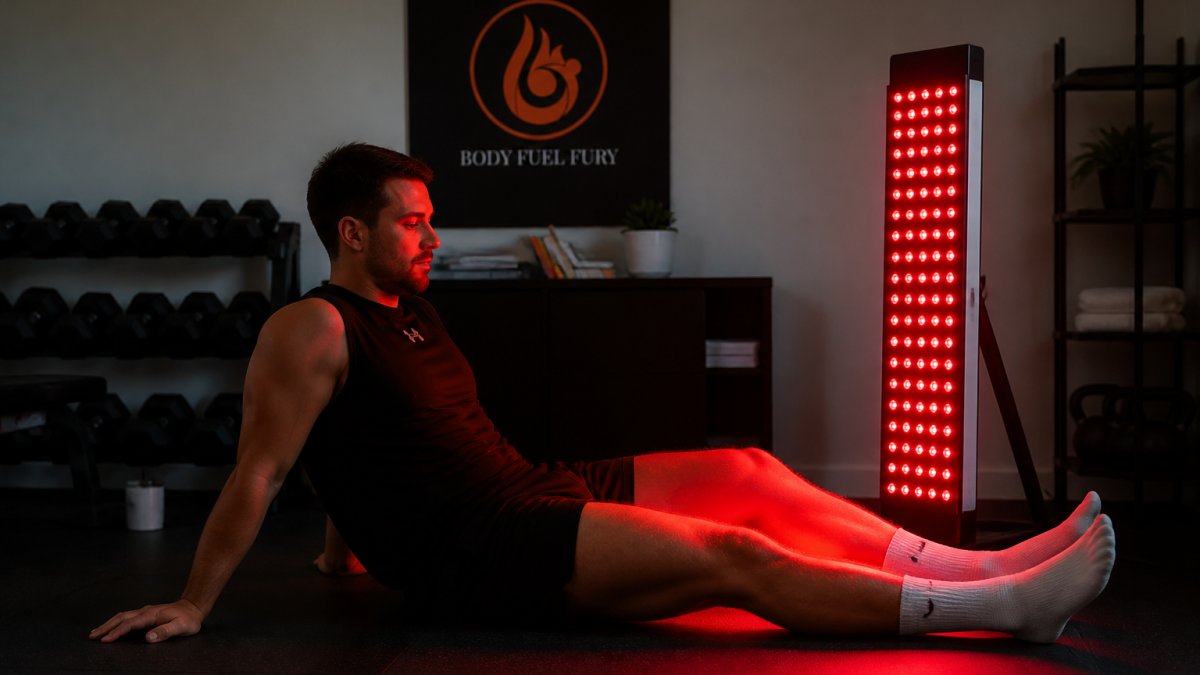
Red light therapy, also called photobiomodulation, is a treatment that uses specific wavelengths of light to stimulate cellular activity in your muscles and tissues, with growing interest in red light therapy muscle recovery among athletes and fitness enthusiasts.
Think of it like giving your cells a boost of energy. When light hits your skin, it travels through tissue layers and reaches the mitochondria, the power plants inside your cells. This interaction triggers biological changes that may help with muscle repair and recovery after exercise.
Photobiomodulation at the Cellular Level
Photobiomodulation is the scientific term for how light affects living tissue at the cellular level. When red or near-infrared light enters your cells, it interacts with a molecule called cytochrome c oxidase in your mitochondria.
More ATP means your cells have more fuel to repair muscle damage and reduce inflammation. This is why some athletes and fitness enthusiasts consider red light therapy a tool for muscle recovery.
The process sounds complex, but the practical result is simple: your muscles may recover faster and feel less sore after intense workouts.
Red Light vs. Near-Infrared Light
Not all light wavelengths work the same way. Red light and near-infrared light behave differently in your body.
Red light (wavelengths around 600-700 nanometers) penetrates skin well but doesn't reach as deep as near-infrared. It's useful for surface-level recovery and may help with skin health too.
Near-infrared light (wavelengths around 700-1100 nanometers) penetrates deeper into muscle tissue and bone.
Many devices combine both red and near-infrared light to cover different tissue depths. The best choice depends on your specific recovery needs and how deep the targeted muscles sit.
Photobiomodulation and Muscle Recovery: What Research Shows
The scientific evidence for red light therapy and muscle recovery is mixed. Some studies show promising results, while others find minimal effects. This inconsistency matters because it affects whether the therapy is actually worth your time and effort. Understanding why findings differ helps you judge whether the evidence applies to your situation.
Why Study Results Conflict
Research quality and design vary widely, and these differences explain much of the disagreement:
Sample size and statistical power: Many studies use 20-40 participants, which is small enough that random variation can dominate results. A study with 15 athletes might show a 20% reduction in soreness by chance alone. Larger, well-designed studies (100+ participants) are rarer and more reliable, but also more expensive to conduct.
Outcome measures: Some studies measure soreness (subjective pain rating), others measure strength loss, inflammation markers, or recovery speed. A therapy might reduce soreness but not restore strength, or vice versa.
Funding and bias: Device manufacturers sometimes fund research, which can introduce bias toward positive results. Independent, peer-reviewed studies are more trustworthy, though no study is perfect.
Placebo and expectation effects: Red light therapy is visible and feels like a treatment, which can trigger placebo responses.
What the Evidence Actually Shows
When you filter for larger, well-designed, independent studies:
- Red light therapy appears to reduce muscle soreness intensity by roughly 10-30% in some cases, particularly when applied post-exercise. This is modest compared to sleep or nutrition.
- Effects on strength recovery and range of motion are less consistent. Some studies show small improvements; others show none.
- Inflammation markers (like creatine kinase) sometimes decrease faster with red light therapy, but this doesn't always translate to faster functional recovery.
- Fatigue and endurance show mixed results. Some athletes report subjective improvements; objective performance gains are rare.
- Timing matters: Post-exercise application shows more consistent benefits than pre-exercise or random timing.
The Bottom Line on Evidence Quality
If you're considering red light therapy, ask yourself: Does the evidence come from a large, independent study with a protocol similar to what I plan to use? If the answer is yes, the therapy is worth a 4-6 week trial. If the evidence is thin or the protocol differs significantly from yours, manage your expectations. Red light therapy may help, but proven recovery methods, sleep, nutrition, active recovery, and strategic training, should remain your foundation.
Red Light Therapy for Muscle Soreness and DOMS
Delayed-onset muscle soreness (DOMS) is that painful stiffness you feel 24-72 hours after a hard workout. Red light therapy may help reduce DOMS, but the evidence is not definitive.
Some studies show that red light therapy muscle recovery applied after exercise reduces soreness intensity. Other studies find no significant difference.
If you're considering red light therapy for DOMS specifically, manage your expectations. It may provide mild relief, but stretching, foam rolling, and adequate sleep are proven methods that should remain your priority.
The key insight: red light therapy might complement your DOMS management, but it shouldn't replace proven techniques.
Timing and Treatment Protocols: When and How to Use It
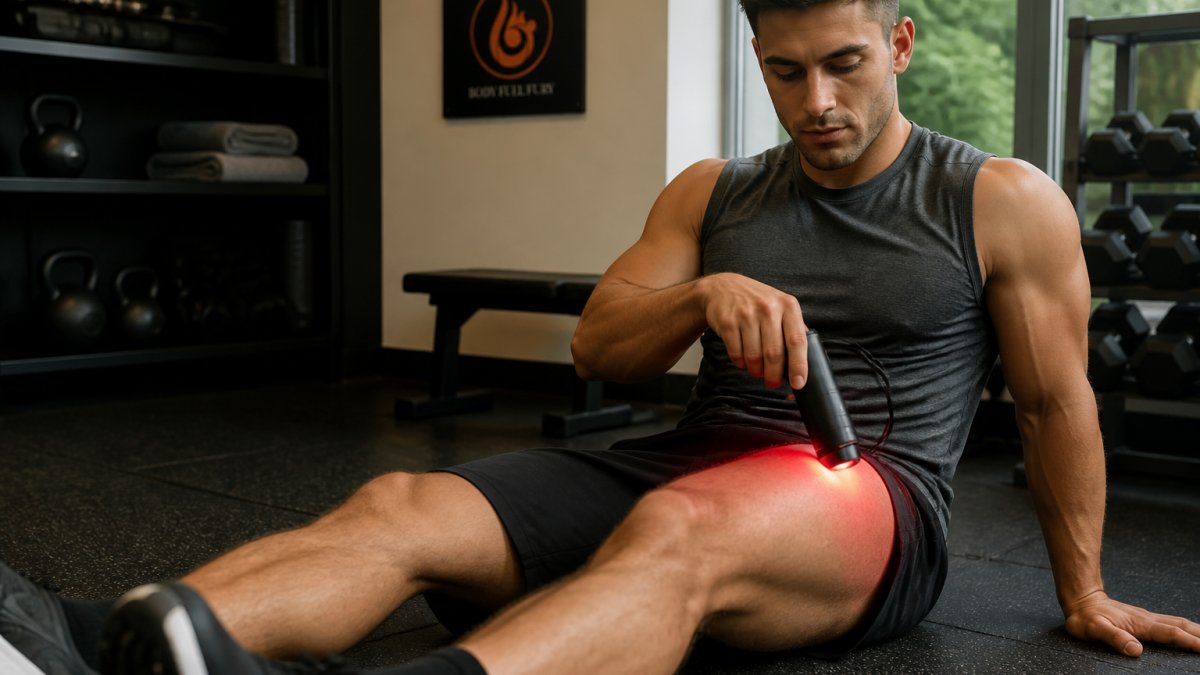
The timing of red light therapy matters. Using it at the wrong time in your recovery cycle may reduce its effectiveness. More importantly, the dose, measured in irradiance (power per unit area) and total energy delivered, is the primary driver of results. Two people using "red light therapy" may experience completely different outcomes if their devices and protocols differ.
Pre-Exercise vs. Post-Exercise Treatment
Pre-exercise treatment (applied 30 minutes to 2 hours before your workout) may enhance performance and prepare muscles for the stress ahead. Some athletes report feeling stronger and more energized after pre-exercise red light therapy.
Post-exercise treatment (applied immediately after or within 2-4 hours) targets the recovery window when muscle damage is highest and inflammatory signaling is most active.
During-recovery-day treatment (on non-training days) is less studied but may support ongoing adaptation and reduce accumulated soreness. Some protocols use daily or near-daily sessions during heavy training blocks.
Red Light Therapy Session Duration and Dosing
Effective treatment requires the right dose. Too little light won't trigger the cellular response. Too much may not add additional benefit and wastes time.
Dose is determined by three factors:
-
Irradiance (power per unit area, measured in mW/cm²): This is the intensity of light reaching your skin. Research suggests 50-100 mW/cm² is a reasonable target for muscle recovery. Devices with lower irradiance (under 30 mW/cm²) may require longer sessions to deliver the same total energy.
-
Duration (session length): A typical effective session lasts 10-20 minutes, depending on irradiance. Higher irradiance devices can achieve results in shorter sessions.
-
Distance from skin: Most devices work best at 6-12 inches from your skin. Doubling the distance reduces irradiance by roughly 75% (inverse square law), so consistency matters.
A practical protocol to consider:
- Wavelength: 600-1000 nanometers (red and near-infrared combined, or near-infrared alone for deeper muscle penetration)
- Irradiance: 50-100 mW/cm² (check your device specifications; this is often listed as "power output" or "irradiance")
- Duration: 15 minutes per session
- Distance: 8-10 inches from skin (measure this consistently)
- Frequency: 3-5 sessions per week
- Timing: Within 2 hours post-exercise, or 30 minutes to 2 hours pre-exercise
- Total weekly dose: Aim for 150-300 joules per muscle group per week (irradiance × duration × number of sessions)
This protocol represents a reasonable starting point based on published research patterns. However, individual response varies. Adjust based on your results and recovery feel.
Why Parameters Vary Across Studies
One reason evidence for red light therapy feels inconsistent is that research studies use wildly different protocols. A study using 600 nm red light for 10 minutes at 50 mW/cm² will produce different results than one using 850 nm near-infrared for 20 minutes at 150 mW/cm². When you read that "red light therapy helps with recovery," the fine print often reveals the specific parameters that worked, and those parameters may not match your device or routine.
Red Light Therapy Safety and Side Effects
Red light therapy is generally considered safe when used as directed. It's non-invasive and doesn't involve heat or chemicals.
Side effects are rare but possible. Some people report mild headaches, eye strain, or temporary skin redness after treatment. These effects usually resolve quickly.
Who should avoid red light therapy:
- People taking photosensitizing medications (check with your doctor first)
- Those with untreated thyroid conditions (near-infrared light may affect thyroid function)
- Anyone with active skin cancer or suspicious skin lesions
- People with light sensitivity disorders
If you have any medical conditions or take medications, consult your doctor before starting red light therapy. It's a low-risk treatment, but individual factors matter.
Effects on Muscle Fatigue and Exercise Performance
Muscle fatigue during and after exercise is different from soreness. Fatigue is the loss of strength or power during activity.
Some athletes report improved endurance and reduced fatigue sensation after using red light therapy. Research suggests it may help by improving blood flow and oxygen delivery to muscles.
However, training itself remains the most powerful tool for building fatigue resistance. Red light therapy might provide a small edge, but don't expect dramatic performance gains.
Think of it as a supporting tool, not a primary performance enhancer. Your training program, nutrition, and sleep matter far more.
Realistic Expectations: What Red Light Therapy Can and Cannot Do
Here's the honest assessment: red light therapy is not a recovery miracle.
What it might do:
- Reduce mild muscle soreness
- Support recovery processes at the cellular level
- Potentially improve blood flow
- Complement your existing recovery routine
What it won't do:
- Replace sleep or nutrition
- Fix poor training decisions
- Eliminate all muscle soreness
- Dramatically boost performance
- Work without consistent use
Many fitness enthusiasts see red light therapy as part of a complete recovery strategy.
The best recovery approach includes quality sleep, proper nutrition, active recovery, and strategic training. Red light therapy can support these fundamentals, but it doesn't replace them.
Red light therapy shows enough promise to be worth exploring if you're serious about recovery. But start with realistic expectations.
At Body Fuel Fury, we support your fitness journey with high-quality recovery tools and supplements designed to work alongside proven recovery practices.
Frequently Asked Questions
Does red light therapy actually help with muscle recovery after exercise?
Red light therapy shows promise for supporting muscle recovery through photobiomodulation, a process where light wavelengths stimulate cellular energy production. Research indicates it may reduce muscle soreness and fatigue when used consistently with proper treatment parameters. However, it works best as part of a comprehensive recovery plan that includes adequate sleep, nutrition, and rest, not as a standalone solution. Results vary based on wavelength, dose, and individual factors.
How long should red light therapy sessions be for muscle recovery?
Most effective protocols use sessions lasting 10-20 minutes, delivered at wavelengths between 600-1000 nanometers (red to near-infrared range). The ideal dose depends on the device's irradiance level and your distance from it. Consistency matters more than duration; daily or every-other-day treatments tend to show better results than sporadic use. Start with 10-15 minutes and adjust based on your response and the device manufacturer's guidelines.
What's the difference between red light and near-infrared light for muscle recovery?
Red light (600-700 nanometers) penetrates skin and shallow tissues effectively, while near-infrared light (700-1000 nanometers) reaches deeper muscle and bone tissue. For muscle recovery, near-infrared light often penetrates more effectively to the muscle fibers themselves. Many devices use both wavelengths together to maximize tissue coverage. The choice depends on whether you're targeting surface soreness or deeper muscle fatigue and repair.
Is it safe to use red light therapy every day for muscle recovery?
Red light therapy is generally safe for daily use when applied according to device guidelines and appropriate wavelengths. No serious side effects are documented at therapeutic doses. However, avoid direct eye exposure without protective eyewear, and consult a healthcare provider if you take light-sensitive medications or have certain eye conditions. Start with 3-5 sessions per week and monitor your response before increasing frequency.